
 4 months ago
Static Media
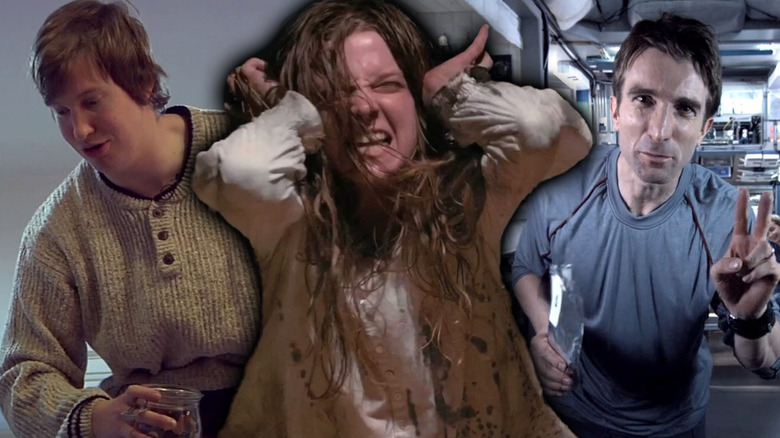
The tropes and clichés of the found-footage genre are well-known and often frustrating to many viewers: the requisite opening half-hour of hanging out with the characters to establish the format's naturalism; the chaotic, jumbled presentation when events start to hit the fan; the inevitable character who must absolutely ask the person filming to please stop doing that. The format is well-worn and entirely familiar, yet it has plenty of examples across genres that elevate the subgenre — just look at "The Blair Witch Project" or "REC."
We're not looking at those well-known paradigms today, however, because this list is for the great found-footage movies that have gone overlooked over the years. In a subgenre that can sometimes have a low ceiling, it's easy for standout entries to get swept up in the surfeit of other horror fare. What you'll find most interesting about this list is that many entries aren't even in the horror genre at all. Though it's often closely associated with and well-suited to movies about things that go bump in the night, some of the most surprisingly effective found-footage movies adapt the structure to other genres. These are the found-footage movies the cultural zeitgeist has neglected.
Here are the 10 best found-footage movies that no one talks about anymore.
The Tunnel
Distracted Media
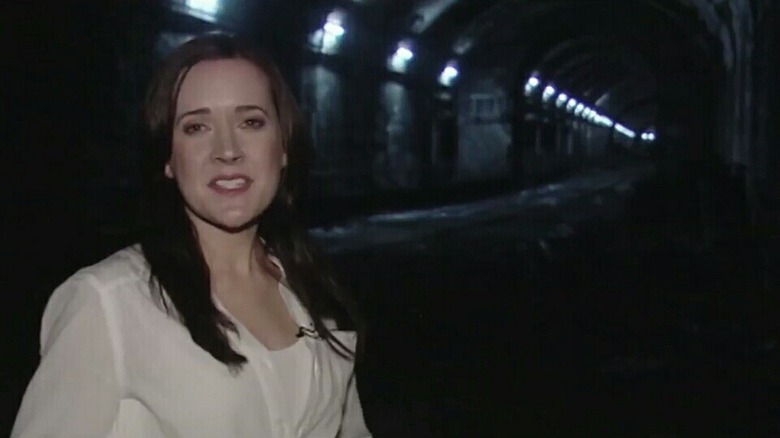
There's no premise better suited to the intense immediacy of found footage than a group of people walking through creepy tunnels that may be home to monsters. That's why this Australian entry in the genre works so well: it indulges the tropes and delivers what you expect, while consistently keeping you on your toes by engaging with the tension of its setting through chaotic, subjective camerawork.
Marking Carlo Ledesma's directorial debut, "The Tunnel" follows a Sydney news crew that smells a potential conspiracy: The Australian government had kick-started a water recycling program, using a large mass of water trapped in underground train tunnels, which they've abruptly abandoned just as a notable number of unhoused individuals have started going missing in those same tunnels. The group takes all their gear to document what they find underground and, wouldn't you know it, gets way more than they bargained for.
"The Tunnel" isn't particularly subtle in its atmosphere-building or its scares, and there's an argument that it could have taken some notes from the "Blair Witch Project" school of less-is-more. But that doesn't mean Ledesma can't mine some effective sequences of nerve-shredding subterranean tension from his scenario. "The Tunnel" has you covered if you're a sucker for the pandemonium of found footage intertwined with some effective moments of frightening monster imagery. At least it's scary enough to land on our list of the 25 scariest found footage horror movies.
Afflicted
Entertainment One
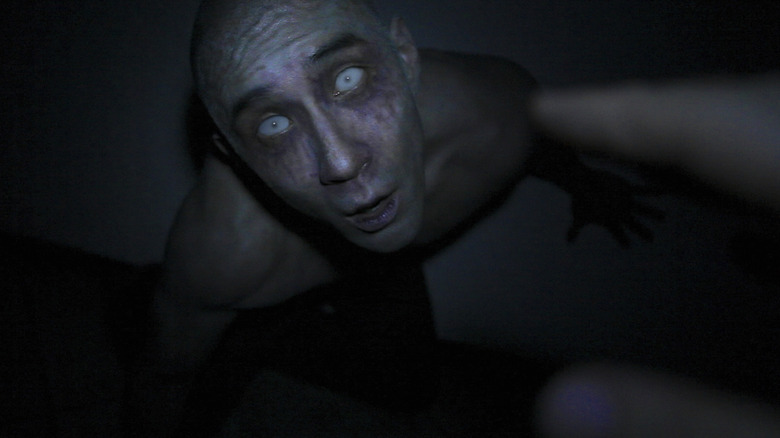
Among the handful of found-footage films that emerged in the early-2010s slipstream of "Chronicle" — that brief moment when the format was being stress-tested against new genres — "Afflicted" is one of the more inventive of the bunch. Canadian filmmakers Derek Lee and Clif Prowse wrote, directed, and starred in the film as fictionalized versions of themselves: two lifelong friends who load up their cameras for a round-the-world trip after Lee receives unsettling medical news. The first act, capturing their genuine camaraderie, builds the emotional stakes that the film cashes in when things go badly wrong in Paris, where a one-night stand leaves Lee waking up with something considerably worse than a hangover: a set of escalating symptoms that first manifest as superhuman abilities and then as something considerably more ancient and sinister.
Lee and Prowse are savvy enough to sidestep the format's most persistent logistical headache: Their characters are aspiring filmmakers and travel vloggers, so their dogged insistence on keeping the cameras rolling in increasingly dire circumstances is simply a function of who they are. That same resourcefulness as low-budget filmmakers is on full display in some genuinely impressive action sequences — Lee scaling buildings, sprinting at inhuman speeds through Parisian alleyways — that punch well above the film's modest production.
What gives "Afflicted" its sting is its refusal to let the body-horror spectacle crowd out the friendship at its center. Watching Lee transform becomes genuinely distressing, not because of what he's becoming, but because of what it's costing both men. At its core, it is a vampire film, but it simply cares far more about the human cost than the mythology.
The Bay
Roadside Attractions
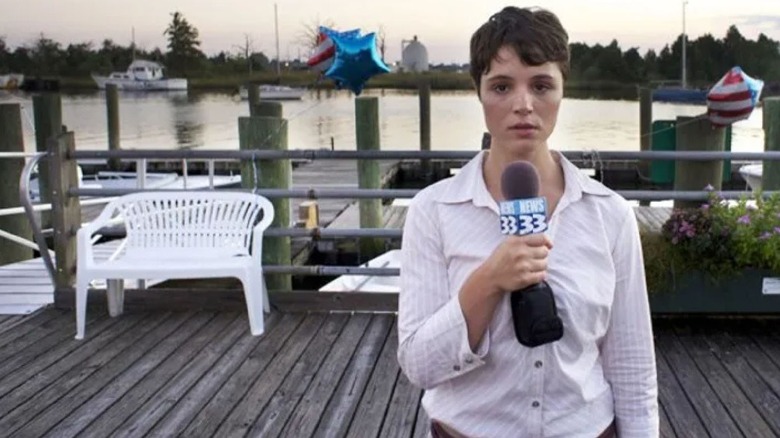
In 2012, Barry Levinson, director of "Rain Man" and "Good Morning, Vietnam," directed this yucky, fretful found-footage horror about a coastal town eaten alive by government malfeasance. Taking a page from the "Jaws" playbook, "The Bay" stitches together the story of a New England summer tourist town, cross-cutting between disparate events during one fatal July 4th celebration, by the end of which hundreds of the town's residents are brutally killed.
"The Bay" is an eco-horror that channels pertinent anger at the propensity of official institutions to ignore environmental regulations and standards to boost business and profit, at the expense of the health of the environment and humans. The local government of the Maryland coastal town of Claridge has failed to uphold healthy ecological standards, knowingly allowing the local waters to be polluted by toxins such as animal excrement and power plant runoffs — the perfect combination to mutate parasitic isopods that begin infecting the local townspeople and eating them from the inside out.
Levinson and writer Michael Wallach put in the legwork to make you feel the authenticity of Claridge, the idealized version of a picturesque, quixotic American community that is soon ravaged by civic corruption. The film also largely sidesteps some of the age-old found-footage tropes of wondering why someone would still be filming: It splices together footage from newscasts, dashcams, personal cameras, and Skype calls to tell its story as a town realizes it's being killed after it's already too late.
Europa Report
Magnolia Pictures
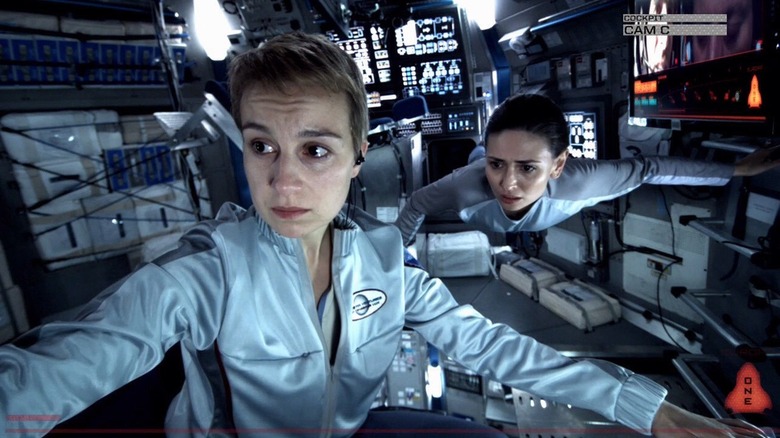
"Europa Report" arrives at its horror through the most credible route available: It earns fear through science. Directed by Sebastián Cordero and written by Philip Gelatt, this 2013 hard-science-fiction found-footage film presents recovered transmissions from a doomed private mission to Europa, one of Jupiter's moons, which is among the most compelling candidates for extraterrestrial life in our solar system. Cordero and Gelatt lean into this with documentary-like rigor: ship cameras, helmet feeds, and mission-control communications lend the found-footage format a credible internal logic, one that doesn't ask you to wonder why anyone would still be filming.
What makes the film particularly cunning is its non-linear structure. We know from the opening minutes that the mission ended in catastrophe, so "Europa Report" operates less as a mystery than as a slow, mournful procession toward an inevitable reckoning, squeezing dread from every equipment malfunction and unremarkable anomaly drifting past the hull. The ensemble, including Sharlto Copley and the late Michael Nyqvist, is credible as scientists, their performances calibrated to the film's broader commitment to plausibility.
Ultimately, though, "Europa Report" isn't a film about the horror of what humanity might find out there but rather the cost of going to look. The film's final act has an elegiac quality, a mournful tribute to human curiosity and the distances it compels us to travel. The film shares more DNA with "Alien" and "2001: A Space Odyssey" than with any found-footage precedent, which is precisely what makes it so easy to misfile under a genre heading and forget. Honestly, it's one of the best science fiction horror movies that you've never seen.
The Sacrament
Magnolia Pictures
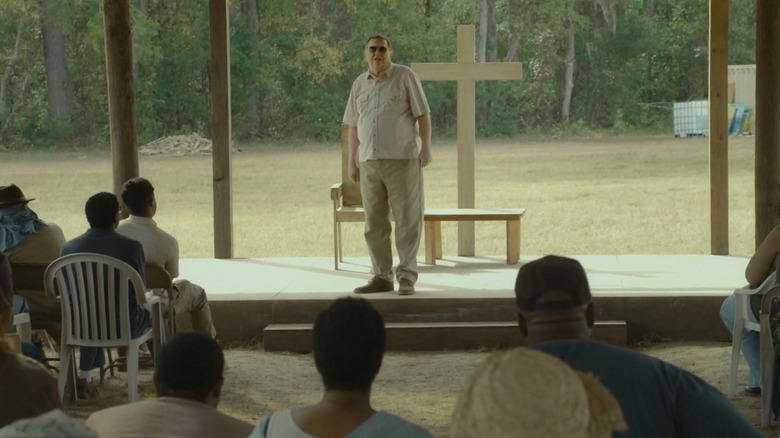
Director Ti West's genre homages take a surprising turn with this follow-up to his slow-burn horror narratives "The House of the Devil" and "The Innkeepers." With "The Sacrament," he moves into found footage to envision a group of investigative journalists from Vice getting caught up in what is essentially the Jonestown Massacre, the infamous mass killing of commune members who had seemingly established a multi-racial, post-capitalist utopia under the deceptive leader Jim Jones.
West follows the story rigorously in his rendition, which instead focuses on the fictional Eden Parish, led by the compelling and manipulative man known as Father, played with unnerving imperiousness by, ironically, Gene Jones. Just as Jim Jones led his followers to slaughter following the investigation by Congressman Leo Ryan, Father in "The Sacrament" turns to savage ends when Jake (Joe Swanberg), Sam (A.J. Bowen), and Patrick (Kentucker Audley) arrive at the scene of Eden Parish, video cameras in tow.
"The Sacrament" is decidedly more "movie-ish" than some other found-footage movies that lean toward pure naturalism — it has a prominent, tense score by composer Tyler Bates, and the characters often speak in dialogue that feels deliberately crafted to move the plot forward and bring them together. But West captures the inevitability of the events laid out with striking dread and startling sadness, as the hardships of vulnerable individuals are manipulated and exploited by a cult leader with a God complex, leading to a ghastly sense of doom.
The Last Exorcism
Lionsgate
"The Last Exorcism" is a rare beast: a seemingly rote found-footage horror movie about a demonic possession that actually earned solid marks from critics and audiences. Despite that, German director Daniel Stamm's film, produced by Eli Roth, has largely been forgotten since its 2010 release, caught up in the glut of anonymous horror movies released at the turn of the new decade.
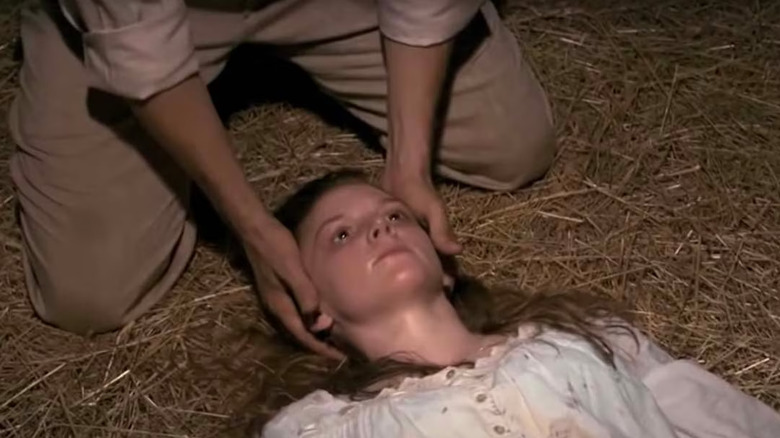
To be fair, the logline doesn't inspire much confidence in terms of originality. The mockumentary format focuses on a camera crew following reverend Cotton Marcus (Patrick Fabian), who has lost his faith in his religion after years of performing faux-exorcisms to satisfy the beliefs of people and families who believe they've been seized by the devil. He takes on one last request from a farmer who believes his daughter, Nell (Ashley Bell), has been possessed by a demon. With Cotton ready to make this his swan song in the world of exorcisms, he finds his faith freshly tested when Nell's possession seems more real than he anticipated.
"The Last Exorcism" gets a surprising amount of mileage out of its themes of lost faith, religious veracity, and the turmoil of being an adolescent girl. It also has the supreme advantage of Bell's performance as the possessed Nell, offering a chilling, unnerving physical performance of contortions and demonic anamorphoses that ornament the exterior of her innocent visage and frame. Stamm puts together some seriously tense set-pieces involving the terror that Nell inflicts on those around her as the extent of the supernatural grip on her soul is gradually revealed. "The Last Exorcism" easily earns a spot among the best exorcism horror movies.
Noroi: The Curse
Xanadeux
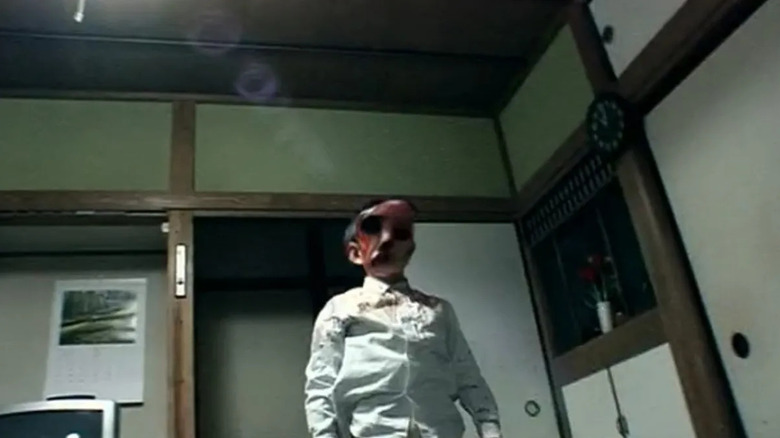
"Noroi: The Curse" is one of the ultimate cult fandom movies. You may have never heard of it, but if you've seen it, there's a good chance you've told everyone in your life to watch it. This slice of anxious found-footage J-horror from prolific director Koji Shiraishi received a polite, quiet reception upon release in 2005, but has continually grown in esteem from horror fanatics and found-footage aficionados.
"Noroi: The Curse" is presented as a piece of lost media, a real documentary following paranormal researcher Masafumi Kobayashi (Jin Muraki) as his investigation into stray ghostly activity between seemingly disparate individuals, their stories tying together as a disturbing tapestry as all signs point toward an ancient, evil being, the demon Kagutaba. Shiraishi brilliantly stages events as a slow accumulation of details that eventually reveal something notably disturbing, entrusting that the audience will pay close attention and relish the experience of a story slowly coming together.
"Noroi" is also the culmination of a wave of uneasy turn-of-the-century Japanese supernatural techno- and melodrama-horror. It's an exemplar of true slow-burn horror, where the fear operates by seeping in from the margins, as dozens of small happenings and major incidents all stacking on top of one another, suggesting a world where something is desperately wrong. It's one of the best Japanese horror movies of all time.
The Dirties
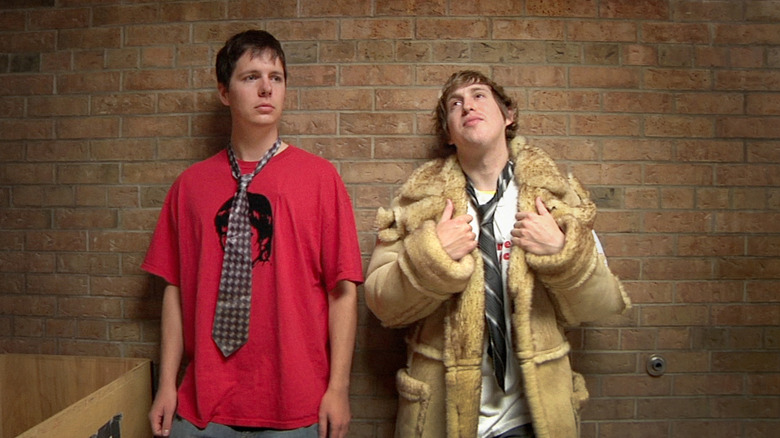
Phase 4 Films
Matt Johnson's "The Dirties" uses the found-footage format for a horror more visceral than the demons and creatures that usually inhabit the subgenre: The film provides an intimate look at the psychology of a school shooter. Johnson's debut feature also casts him as the subject, playing a fictionalized version of himself as an outcast high schooler alongside his pal Owen (Owen Williams). Their botched short film for their AV class, made as a revenge fantasy against the school's group of bullies known as The Dirties, evolves into plans for real-life retribution.
"The Dirties" is a bit of a morbid inverse of the similar mockumentary stylings of Johnson's web-series-turned-TV-show "Nirvanna the Band the Show" (which was also adapted into a brilliant 2026 comedy). Each project centers on fanatical media obsessives with a single-minded goal they fixate on to a manic degree, and each is told in a style that blends reality and fiction. "The Dirties" was sometimes shot on the fly and in a guerrilla style, with people who didn't exactly know why they were being filmed.
That, of course, contributes to the dread-inducing authenticity and believability of Matt's shift from simulated violence to a desire for the real thing, which goes underestimated by both Owen and the pair's peers. It's a fascinating study of someone who fundamentally misunderstands the flawed and violent behaviors of characters in the art they admire ("Pulp Fiction," "Fight Club," "The Catcher In The Rye") and how that misunderstanding feeds into their detachment from reality, leading to full-on psychopathy.
The Last Broadcast
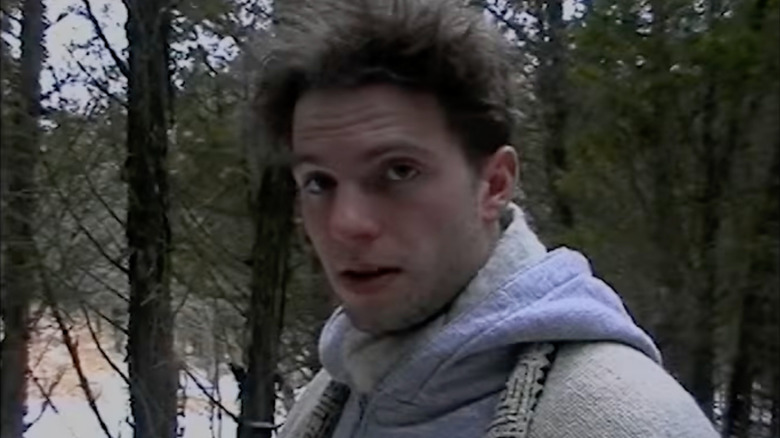
Wavelength Releasing
There's no mystery behind why 1998's "The Last Broadcast" has been somewhat lost to time, because it was immediately succeeded the following year by the viral sensation "The Blair Witch Project." Whereas the latter went down in the collective memory as the de facto jumping-off point for a cultural interest in found footage — and indeed, the film's maddening, mysterious nature is just as fascinating today — "The Last Broadcast" was left to languish in relative obscurity as "that found footage movie that came out before 'Blair Witch.'"
It deserves more than that, though. Stefan Avalos and Lance Weiler serve as the producers, writers, directors, and stars of the faux-documentary that makes up "The Last Broadcast," which is assembled with rigorous attention to the tone of a methodical investigation. Focusing less on scares than on a mounting dread that comes from the disturbing answer found through the procedural investigation of a disturbing murder case, the film follows documentarian David Leigh (David Beard) as he searches for answers regarding the killing of a crew of public-access television hosts whose live broadcast from the Pine Barrens in search of the fabled Jersey Devil ended in bloodshed.
The film can occasionally be a touch dry, so meticulous are its ambitions to reproduce the tenor of a true documentary format. But it has an ever-encroaching sense of trepidation in its eerie mood and draws on forward-thinking ideas about how the combination of consumer-grade media and the internet would allow images and facts to be manipulated in ways the world remains ill-equipped for, even to this day.
Project X
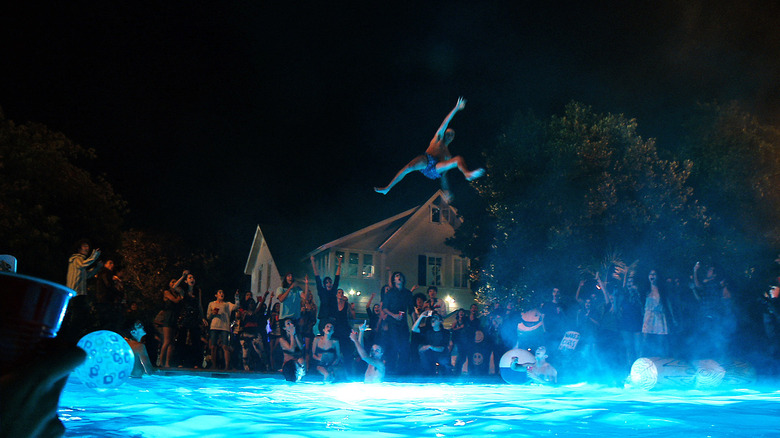
Warner Bros. Pictures
Feel free to debate amongst yourselves whether or not "Project X" is any good, but the fact remains that it was a huge cultural event, pulling in a worldwide total of $102 million on a $12 million budget. And yet, everyone seems to have completely memory-holed this bellicose found-footage high-school house-party movie, perhaps because people can't detach themselves from who they were in 2012, the year this film was released, depicted here with such accuracy and apt embarrassment.
Maybe there's value in that, though. "Project X" is now most successful as a precise and cringe-inducing cultural artifact, one that leads viewers into a vivid rendering of a time period now bygone, preserved here in exaggerated detail, like an insect trapped in amber that's been calcified over with cheap beer, weed, and Obama-era optimism while sitting in a room playing "Pursuit of Happiness" by Kid Cudi. A movie that so plainly wears then-contemporary youth culture on its sleeve inevitably brings back the humiliating reality of the kid you used to be, making "Project X" a viscerally harrowing time capsule.
Even then, purely in terms of its ambitions as a film, "Project X" has an admirable commitment to the deranged psychological id it reaches for. Directed by Nima Nourizadeh and co-written by Matt Drake and "Scott Pilgrim vs. The World" writer Michael Bacall, the film allows the obnoxious, brash personalities of its party-seeking high school dudes to take center stage, eventually giving way to truly ludicrous levels of uninhibited chaos, fulfilling the wildest fever dreams of debauched adolescent fantasy.




 English (US) ·
  Indonesian (ID) ·