
 1 month ago
Columbia Pictures
As of August 22, 2026, "Stand By Me" is 40 years old. But the film could be 50, 60, heck 100 years old and it wouldn't matter. "Stand By Me" is a deeply human movie about the transition from childhood to adulthood that transcends its nostalgic 1950s setting to become a truly timeless classic. It remains the coming-of-age movie gold standard.
The box office performance of such a cherished film might seem irrelevant. Who cares how much this movie made when it resonated so deeply with multiple generations? Well, happily, the film actually was a box office hit, grossing $52.4 million on a $7.5 million budget. That's not an insignificant fact, either. It could've easily fallen between the cracks, given its straddling of the line between a "Sandlot"-like kids movie and a serious adult drama. But director Rob Reiner's deft handling of that very combination made the film a success, which is part of the reason why it remains so beloved four decades after its initial release.
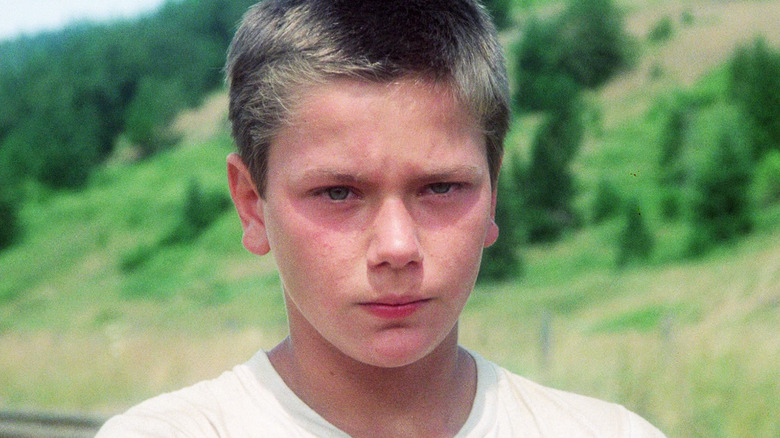
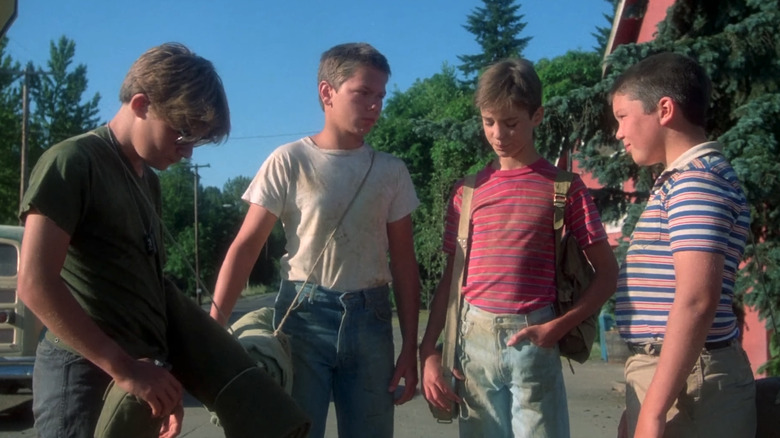
Of course, had Reiner hired the wrong actors for the main roles, none of that would have mattered. There wasn't a single weak link among the main cast. Wil Wheaton's Gordie Lachance, River Phoenix's Chris Chambers, Corey Feldman's Teddy Duchamp, and Jerry O'Connell's Vern Tessio were all entirely believable characters, with Reiner somehow coaxing his young cast to deliver some of the finest child actor performances ever put to screen.
Combine all that, and you've got not only one of the best movies of the 1980s but one of the best movies in general. "Stand By Me" is a true all-timer, and that's really all that needs to be said about this oft-deconstructed coming-of-age triumph. But since it has been 40 years, why not remind ourselves why the film deserves such praise?
Rob Reiner elevated Stand By Me beyond its source material
Columbia Pictures
1986 was the year of "Top Gun," "Crocodile Dundee," and "Aliens." But amid these towering blockbusters came the comparatively modest "Stand By Me." Raynold Gideon and Bruce A. Evans adapted Stephen King's 1982 novella "The Body" to create the script that first intrigued Rob Reiner — even while pretty much every studio turned down the Stephen King adaptation. But the director wasn't ready to commit at first. Then, he had an insight that changed everything. This was a story primarily about Gordie Lachance, whose parents were struggling to come to terms with his older brother's death and, in the process, had neglected their youngest son.
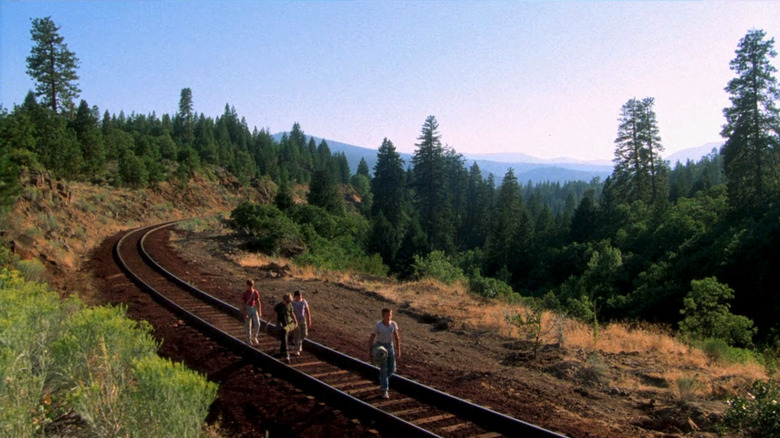
Armed with this perspective on the source material, Reiner agreed to direct. Set in the fictional town of Castle Rock, Oregon in 1959, the film follows four 12-year-olds as they set out in search of the body of missing middle-schooler Ray Brower. When they leave, their aim is to become hometown heroes. When they return, they've taken their first steps into adulthood, ultimately leaving an anonymous tip for the police about Brower's body.
While "Stand By Me" uses much of the dialogue from King's novella, the film also makes significant changes. In the end, when Chris Chambers faces down Kiefer Sutherland's bully Ace Merrill, it's Gordie, not Chris, who raises a pistol and sends Merill and his cronies running — a change that Stephen King wished he'd written in his novella. The moment symbolizes Gordie's newfound confidence and self-possession, making the final flash forward, in which an adult Gordie (Richard Dreyfuss) laments the way he "never had any friends later on like the ones [he] had when [he] was 12," even more impactful. These changes paid off.
Stand By Me remains as powerful today as it did 40 years ago
Columbia Pictures
In a 2016 interview with Deadline, Stephen King confirmed that, along with "The Shawshank Redemption," "Stand By Me" was his favorite movie adaptation of his writing, and it's not hard to see why. It was a commercial success that also earned an Oscar nod for Best Adapted Screenplay, yes, but more important than its financial performance or accolades is the fact it came to represent a kind of apotheosis for the coming-of-age tale. On the surface, it's a 1950s throwback about a simpler time. Yet, "Stand By Me" is much more than that, transcending its bucolic setting and '50s nostalgia to represent a truthful and deeply resonant paean to adolescence that simultaneously faces the harsh realities of life head-on.
At the end of "Stand By Me," we learn that the four friends ultimately drifted apart and that Chris Chambers was killed years later. That alone speaks to the way that "Stand By Me" doesn't try to sugarcoat reality. But even without that closing scene, the film treats its child cast as adults from the very beginning. They're kids, but they come with real problems with which they grapple throughout their journey through rural Oregon. From broken homes and juvenile delinquency to neglect and even physical abuse, these boys are hardly insulated from the often cruel nature of life and stand at the precipice of losing their innocence.
That's something everyone can relate to, regardless of generation. So, while "Stand By Me" captured the attention of generation X four decades ago, it remains just as relevant today and will remain so for every generation that follows.







 English (US) ·
  Indonesian (ID) ·