
 8 hours ago
Columbia Pictures
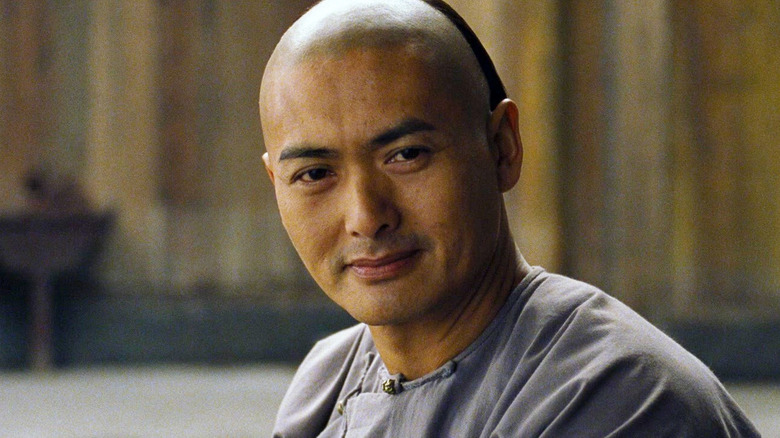
Those planning to stream Ang Lee's "Crouching Tiger, Hidden Dragon" while it's on Prime Video would do well to remember just how trail-blazing the movie really was. In the 1970s, martial arts cinema in the United States was generally consigned to grindhouses and late-night television. The exception was Bruce Lee, who might've given the genre (including all-time great kung fu movies by the likes of the Shaw Brothers) the artistic credibility it deserved if he hadn't died prior to the release of his 1973 hit "Enter the Dragon." Instead, Chuck Norris became the karate-chopping star du jour stateside, leading to a string of B-movies ranging from godawful to delightfully disreputable (though, in fairness, he did make a legitimately good action movie in "Code of Silence").
While Hollywood moved on to aikido practitioner Steven Seagal and splits-enthusiast Jean-Claude Van Damme, the Hong Kong film industry was churning out classics starring such dynamic performers as Jackie Chan, Sammo Hung, Michelle Yeoh, Yuen Biao, and Jet Li. Studios had tried to harness Chan's Bruce-Lee-by-way-of-Buster-Keaton artistry, but he was largely straitjacketed. Meanwhile, U.S. distributors seemed entirely uninterested in thrilling wire-work spectacles like the "Once Upon a Time in China" and "A Chinese Ghost Story" movies. For cinephiles who knew what was up, Tai Seng Video Marketing was a VHS savior. The tapes were pricey, but the films were worth it.
Hence, U.S. moviegoers had no idea what they were missing. They got a taste when New Line and Miramax acquired the rights to some of Chan's best Hong Kong efforts, but the gravity-defying majesty of "Once Upon a Time in China" was unknown to them until the Wachowskis appropriated it for "The Matrix." Even then, they weren't ready for the balletic beauty of Ang Lee's four-time Oscar-winner, which would've made Bruce Lee proud.
Crouching Tiger, Hidden Dragon brought the grindhouse to the art house
Columbia Pictures
I went to see "Crouching Tiger, Hidden Dragon" on opening night in New York City. Ang Lee's film had been receiving raves since its 2000 Cannes Film Festival debut, so it was a packed house populated by many people who'd probably looked down their nose at martial arts movies for most of their lives. Seriously. The crowd skewed old and reeked of money. Once the credits rolled, they were headed out to a restaurant to rack up a bill that would exceed my monthly pay.
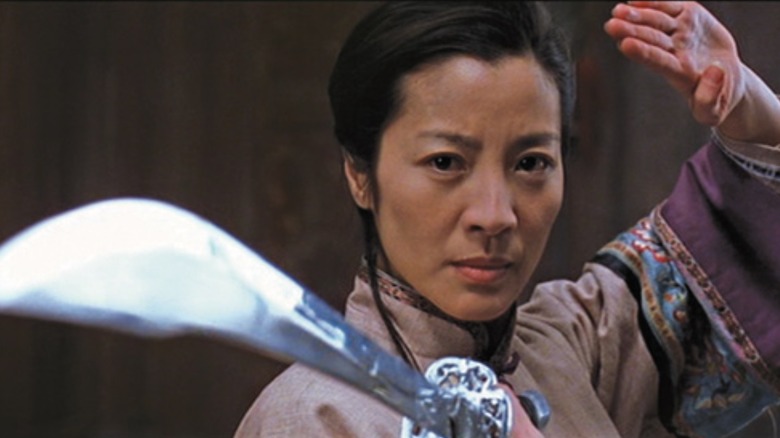
Lee casts a mystical spell from the opening shot, but he blew these people's minds with the rooftop chase between Michelle Yeoh and Zhang Ziyi's characters. Even if they'd seen "The Matrix," I sincerely doubt these folks had ever seen two women engage in such elegantly choreographed combat before. You could just feel the energy building in the room. Once Yeoh was left holding a dart, and Zhang had escaped, the entire house burst into applause.
There would be more prestige martial arts dramas like Zhang Yimou's "Hero," "House of Flying Daggers," and "Curse of the Golden Flower," but the wire-work aesthetic was generally adopted by Hollywood B-actioners, some of which starred a bulky Steven Seagal. Quentin Tarantino's "Kill Bill" deserved better, but he acceded to sex predator Harvey Weinstein's insistence that the four-hour epic be split into two movies and wouldn't release "Kill Bill: The Whole Bloody Affair" for decades. I'd like to see Lee revisit the form, but he's big on not repeating himself. Nevertheless, whenever you see characters floating and fighting in ways that are more aesthetically pleasing than, say, the limb-snapping intensity of "The Raid," know that "Crouching Tiger, Hidden Dragon" made this commercially acceptable.



 English (US) ·
  Indonesian (ID) ·