
 3 months ago
DC Comics
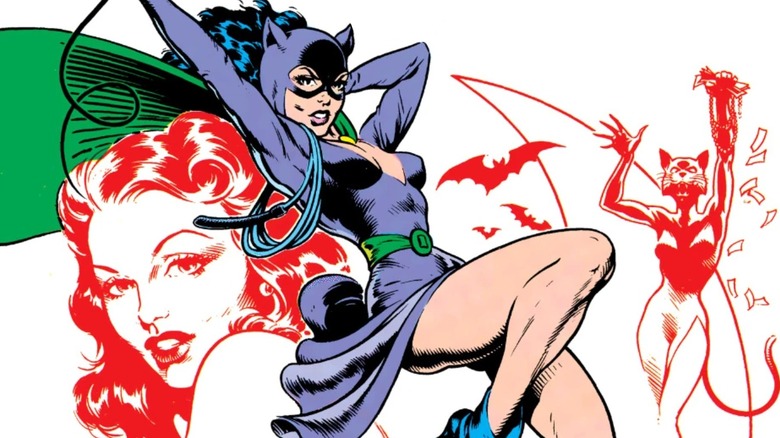
Batman debuted in 1939's "Detective Comics" #27 by Bill Finger and Bob Kane, but it didn't take long for his popularity to explode. "Detective Comics" became all about Batman, while he also got his own self-titled series in 1940.
Since then, both "Batman" and "Detective Comics" have run alongside each other as the two primary Batman-starring comic series. While Batman had already fought criminals, mad scientists, and vampiric monks, "Batman" #1 marks the start of the now-classic rogues' gallery; that issue was the first appearance of the Joker and Catwoman (in separate stories, granted).
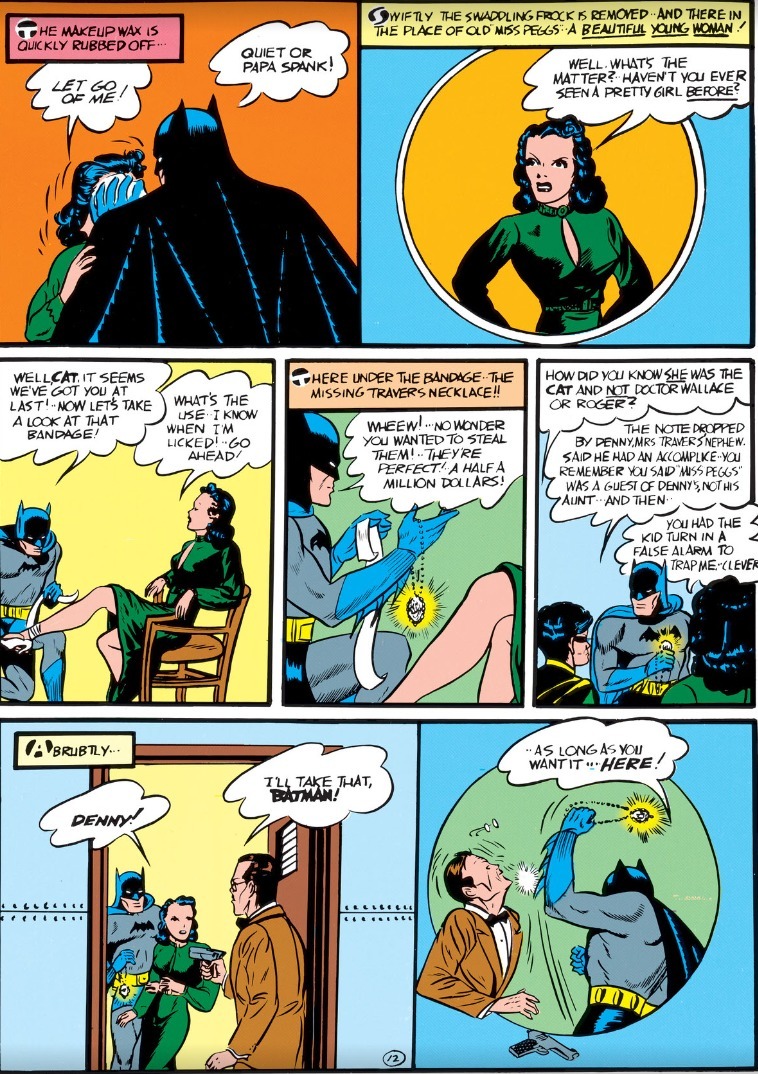
The Joker was more fully formed right off the bat, rocking his evil clown look and riffing on the 1920s film "The Man Who Laughs." Catwoman, though, just barely resembles the character we know today. The story, set aboard a yacht, sees Batman and Robin try to stop a disguised thief, "The Cat," from stealing a necklace.
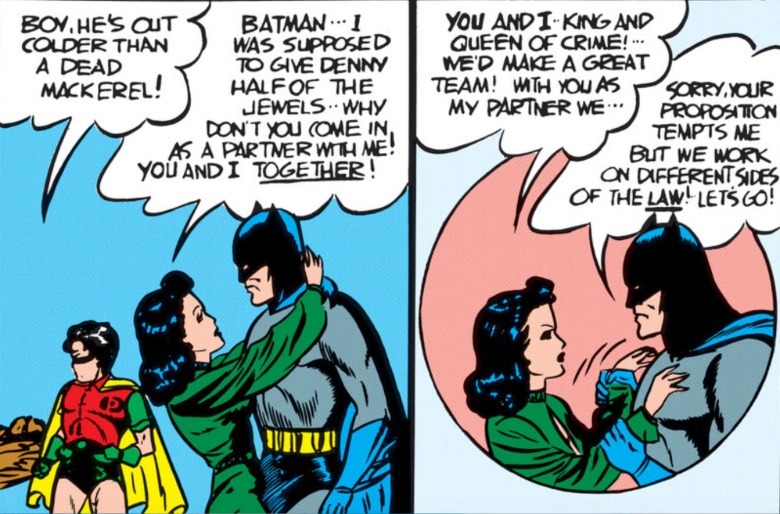
At the end of the story, they nail the Cat in the guise of an elderly woman. As Batman pulls off that disguise to reveal the youthful Selina Kyle, we get a line that lives in infamy across Batman memes: "Quiet or Papa spank!" This was the 1940s, remember, when violence against women could be played for comedy like that.
 DC Comics
This early Catwoman doesn't even have a cat theme. "The Cat" refers only to the idea of a cat burglar, rather than any detail of her costume or dual identity. However, her famous half-foes/half-lovers dynamic with Batman is there from the moment they meet.
 DC Comics
The many lives of Catwoman in DC Comics, explained
DC Comics
"Batman" issue #2 paired the Cat — now called "Cat-Woman" — up with the Joker as they compete to steal some jewels. (The Joker himself had recovered from an apparent death in his debut.) Unlike the Joker, Catwoman (her name was eventually changed) escapes at the end, setting up an 80+ year history of clashes with Batman.
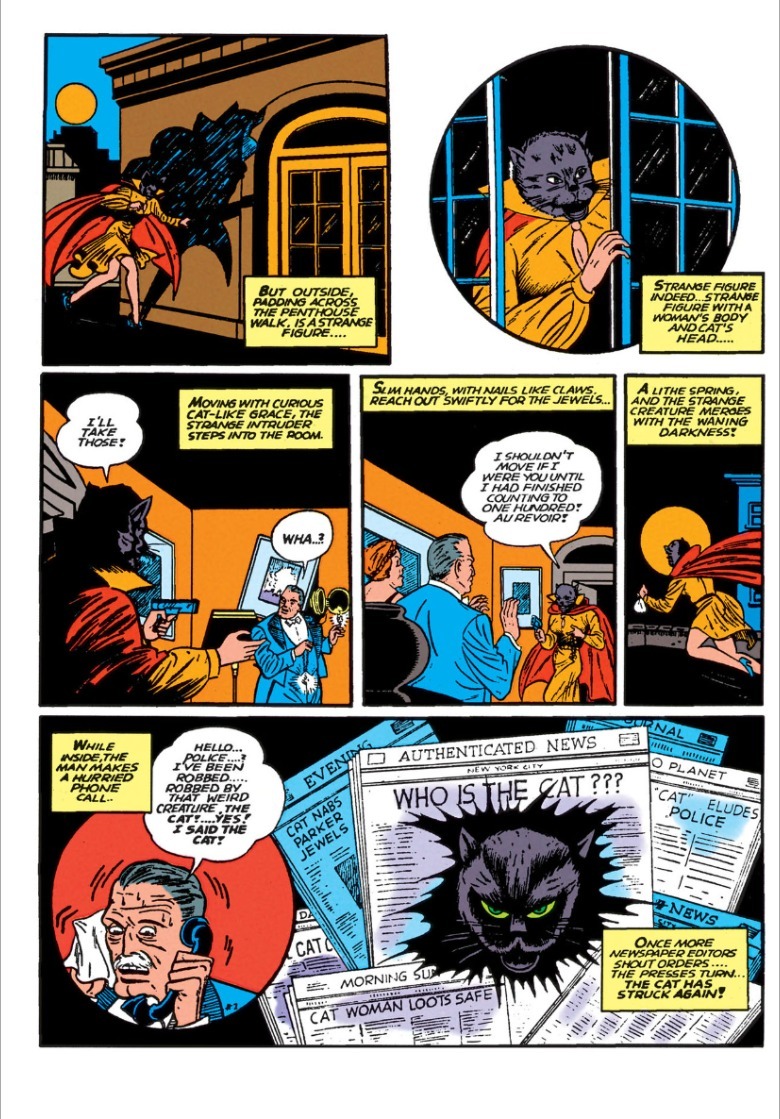
Come issue #3, Catwoman finally lives up to her name, wearing a furry cat-like mask alongside a caped orange dress. The costume, which makes her look like a woman with a cat's head, needed some work, but her motif was finally pinned down. She also once more escapes justice at the end of this issue by distracting Batman with a kiss.
 DC Comics
In the 1950s, Catwoman's role in "Batman" comics declined. Dr. Fredric Wertham, a psychiatrist who believed comic books were spreading indecent messages to children, singled out Catwoman in his 1954 book "Seduction of the Innocent" as a poor depiction of women: "A typical female character [in 'Batman' and superhero comics] is the Catwoman, who is vicious and uses a whip."
Wertham's crusade led to the establishment of the Comics Code Authority (CCA), which imposed strict limits on the content comics could feature. While comics historian Brian Cronin (at CBR) disputes that the CCA specifically banned Catwoman, she largely vanished from this era. Batman's love interest became Batwoman/Kathy Kane, selling young readers on a wholesome Bat-family.
Then, the Adam West "Batman" series featured Catwoman (played in succession by Julie Newmar, Lee Meriwether, and Eartha Kitt) as a recurring guest villain. That led to a resurgence of Catwoman in the comics, as well as the creation of new femme fatale villains (like Poison Ivy) modeled on Newmar's Catwoman.
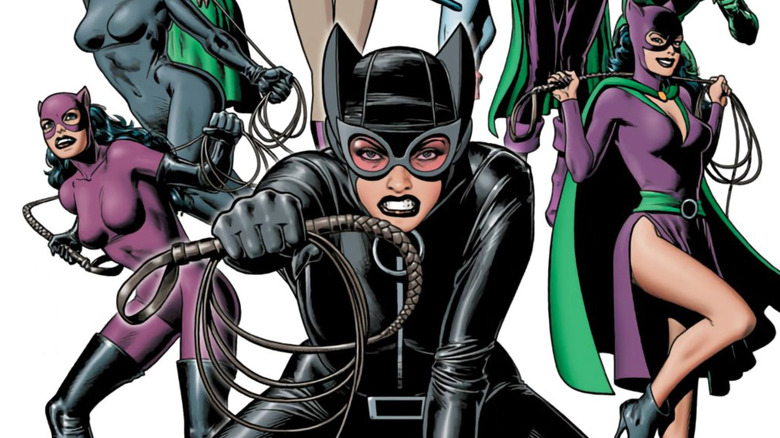
The reinventions of Catwoman across DC Comics
DC Comics
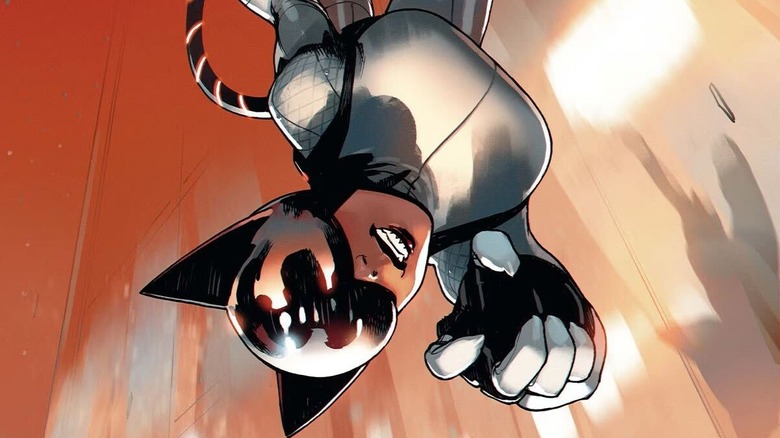
Since Catwoman's debut — with Batman threatening to spank her — there's always been BDSM coding in her character. Her go-to whip weapon, while evoking a cat's long tail, also adds to that. Several modern Catwoman designs, like Michelle Pfeiffer's Catwoman in "Batman Returns," feature her in all-black skintight leather as a dominatrix would.
That's most explicit in Frank Miller and David Mazzucchelli's 1987 "Batman: Year One." Selina Kyle is literally a dominatrix until Batman's war against Gotham's rich criminals inspires her to change careers. Buying a catsuit, Selina decides to rob from the rich and give to the poor (herself).
(In Tom King's late 2010s "Batman" run, Bruce and Selina constantly disagree on whether they first met on a boat, like in "Batman" #1, or in Gotham's red light district, like in "Year One.")
"Year One" revised what made Catwoman and Batman foils. Previously, Selina was a socialite who moved in the same social circles as Bruce Wayne but embraced crime rather than fighting it. Since "Year One," she's instead portrayed as someone from the lower classes who climbs to the top (and who uses her skills not only to steal but also to protect the forgotten women of Gotham).
Scott Snyder and Nick Dragotta's "Absolute Batman" ties Selina's rise to Bruce's. Here, they're childhood sweethearts who grew up in Crime Alley together, and made it big by robbing crime boss Carmine Falcone. Bruce poured the money into being Batman, while Selina — who returned to Gotham as Catwoman in "Absolute Batman" #13 — is living it up as part of the 1%.
"Absolute Catwoman," co-written by Snyder and Che Grayson with art by Bengal, explores Selina fighting from atop that nest she's built herself. It looks poised to take its place among the great Catwoman comics.





 English (US) ·
  Indonesian (ID) ·