
 3 months ago
Warner Bros. Pictures
Warning: This article contains major spoilers for "Supergirl."
Dating back to the character's origins in DC Comics, Supergirl has always been concerned with the question of how to differentiate the hero from her more famous cousin. It hasn't helped that she's literally of the same background, with the same power set, and even shares the same outfit as Superman. Heck, even this latest live-action reimagining bakes that tension into the very release of the movie — "Supergirl" basically debuts in the shadow of last year's franchise-restarting "Superman," something that's almost made literal with Milly Alcock's cameo appearance as Kara Zor-El at the end of James Gun's film.
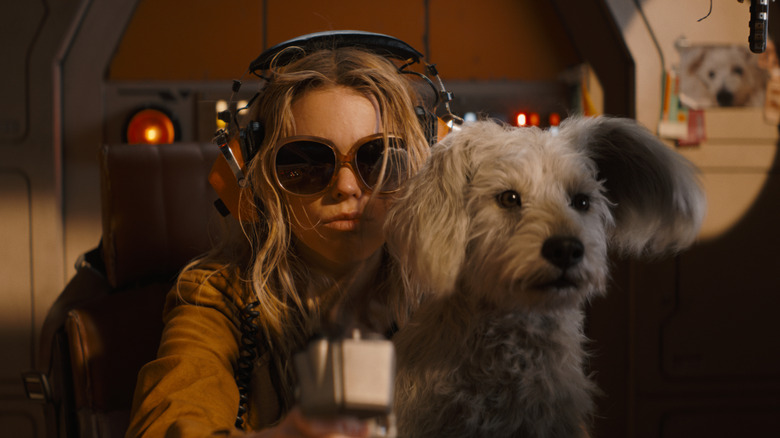
Needless to say, director Craig Gillespie's "Supergirl" handles this issue by letting its rebellious, self-destructive title character's personality dictate much of the action. Right from the get-go, Kara is hungover, disaffected, and content to wander the galaxy from one alien dive bar to the next with her dog Krypto. The attempts by David Corenswet's Clark to reach out and politely urge her to return home, while well-meaning, only further showcases the divide between the two. Kara is all piss and vinegar, burying her turbulent emotions beneath an epic bender across the cosmos. This couldn't be more at odds with her buttoned-up relative, who only just went through his own journey of self-discovery in his own wholesome way.
This leads to a movie that stands apart from "Superman" with its harder-edged approach — but that strength gives way to the most glaring weakness of "Supergirl," as well. Although this makes for a unique, standalone adventure that's willing to go to some seriously dark places, the movie undercuts these aims at almost every turn. The result is a haphazard tone, a script that feels at odds with its direction, and a Supergirl-sized identity crisis.
Supergirl can't (or won't) fully commit to its darkest storylines

Parisa Taghizadeh/Warner Bros. Pictures
If you came to "Supergirl" expecting this messy heroine to save squirrels from danger or wax poetic about her feelings as a human being while confronting the film's big bad, uh, may we kindly direct you to last year's aw-shucks "Superman" reboot instead? The second installment of the newly-christened DC Universe might share a similar interest in punk-rock attitudes, but its interpretation of that vibe is much less optimistic than its predecessor. This is a movie dealing with the uglier side of life, where good values and strong principles are more likely to get you killed than anything else.
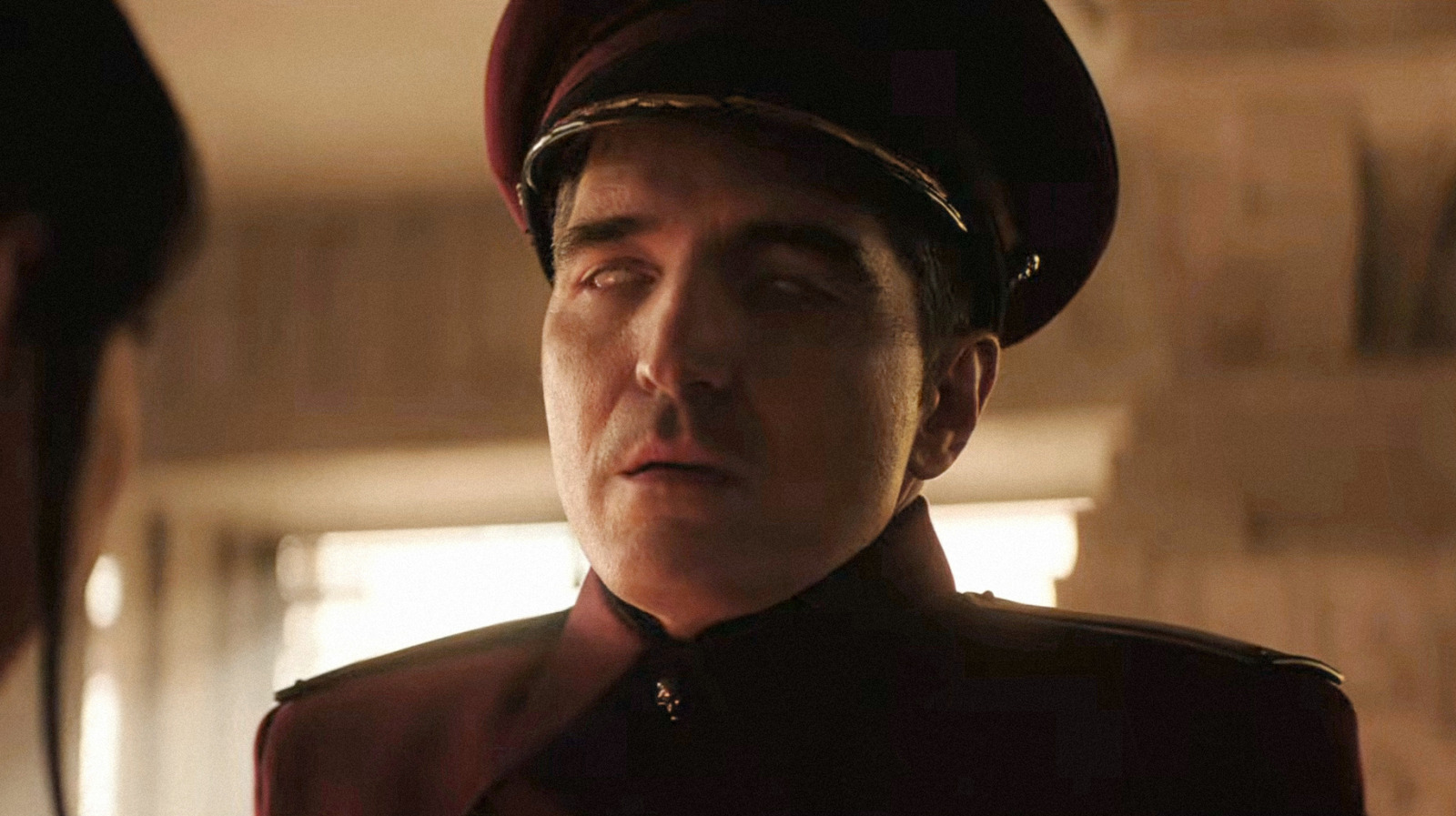
This is best exemplified by its central villain, the abhorrent Krem of the Yellow Hills (Matthias Schoenaerts). The story establishes Krem as the leader of a group of ravaging Brigands with a taste for murder and mayhem, but their true aims are far more disturbing. At one point, we learn — through a throwaway line that's never explored any further — that this band of criminals is actually part of an all-male society that relies on trafficking women and young girls to further their vague goals. On the surface, this makes all those "Mad Max" comparisons in the early reactions to "Supergirl" make a little more sense (complete with a group of "wives" that are constantly victimized but, crucially, never actually individualized here). In practice, however, this crassly weaponizes the threat of implied sexual violence to raise the stakes ... though without ever actually having to deal with the uncomfortable realities of this plot device.
The creative choice to merely gesture at this dark underbelly stands at odds with the otherwise pulpy, crowd-pleasing, needle drop-heavy fun elsewhere — and the inability (unwillingness?) to reconcile these extremes speaks volumes.
Supergirl's tragic Krypton flashback is its most effective sequence -- but even this ignores its darker implications
Warner Bros. Pictures
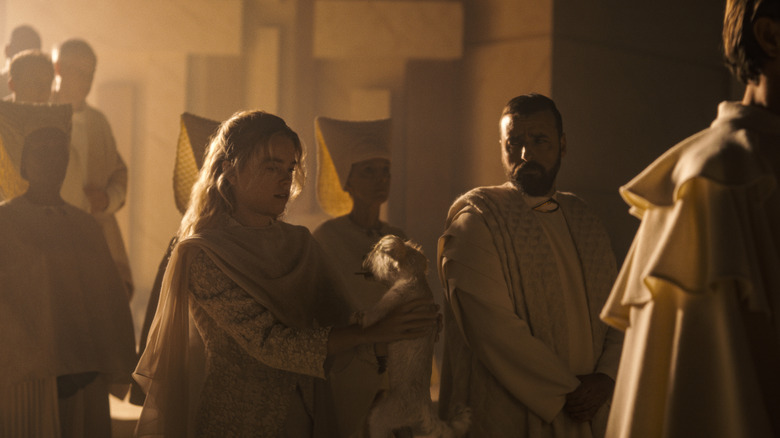
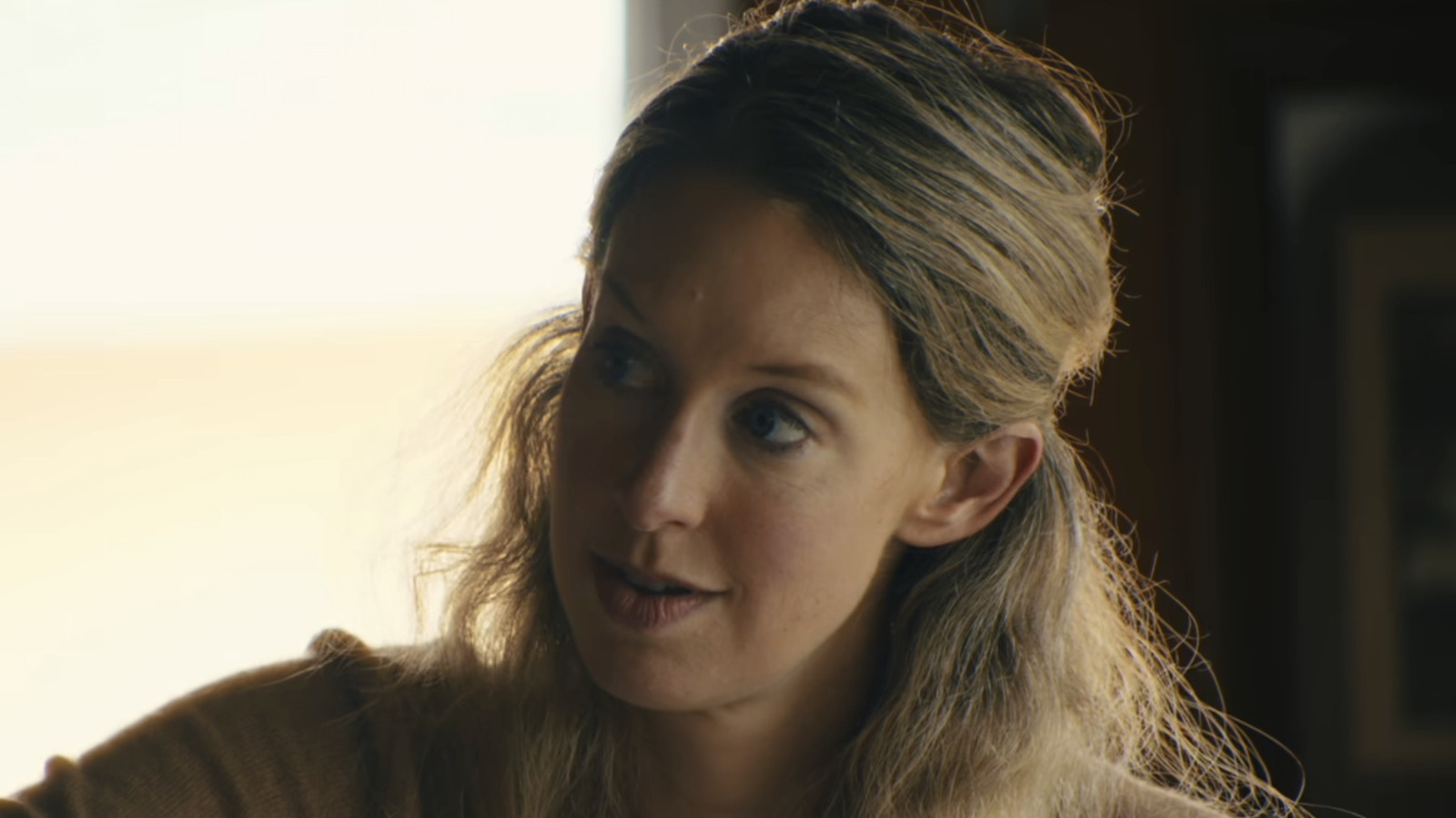
That reluctance to fully engage with the darkness encroaching just off-screen throughout "Supergirl" also extends to Kara's own backstory, rooted in tragedy and death following the destruction of her home world Krypton. By now, everyone knows the story of how this group of advanced beings are unable to prevent the end of their existence. But actually seeing it through the eyes of Kara's parents, Alura (Emily Beecham) and Zor-El (David Krumholtz), hits differently. This short story, told entirely through flashback as a haunted Kara shares her pain with her companion Ruthye (Eve Ridley), is by far the best and most effective sequence in "Supergirl" ... with one important caveat.
Even here, director Craig Gillespie and writer Ana Nogueira don't seem to be on quite the same page. It's heart-wrenching to witness Kara's idealistic parents confront the impending disaster head-on, and yet choose to have their daughter Kara anyway (although this hopeful decision is, once again, only implied and glossed over with a time-jump rather than dramatized). But not once does the film reckon with the optics of Zor-El being the one who makes the call to engage the force field that saves the survivors in Argon City, yet dooms everyone else to a horrific death. As young Kara grows up in the ruins of an extinct world, "Supergirl" ignores the complicating factors of who's responsible and why — and, no, a stray line of dialogue blaming an unseen Jor-El (played by Bradley Cooper in "Superman") doesn't quite cut it.
Ultimately, "Supergirl" tries to have it both ways — a darker, more mature take on a classic character that doesn't alienate anyone. Instead, it falls woefully short. "Supergirl" is now playing in theaters.




 English (US) ·
  Indonesian (ID) ·