
 2 months ago

Universal Pictures
Have you checked your local showtimes for Christopher Nolan's "The Odyssey" in IMAX lately? Chances are, whether you're lucky to live in an area near an IMAX 70mm theater or not, you'd be hard-pressed to find a decent seat for "The Odyssey" in IMAX for the next few days, or even the next few weeks. That's proof enough of just how massively popular and influential the IMAX exhibition format has become. While Nolan's championing of the format ever since 2008's "The Dark Knight" is a big part of the explanation for this, the way that Hollywood has generally embraced the format over all others is what's helped it continue to enjoy such demand. After all, would Disney/Marvel have gone to the trouble of coming up with their "Infinity Vision" concept if IMAX were just another Premium Large Format offering? You don't see a studio being jealous of 4DX that much.
While studios, distributors, and theater owners of course still happily promote their other premium non-IMAX offerings, the reason IMAX is the clear frontrunner in PLF screens is how attractive it's become to filmmakers. The proprietary screen sizes within the format (either 1.90:1 in IMAX digital screens, or 1.43:1 in IMAX 70mm and dual-laser screens) create a movie-watching experience that's impossible to replicate 1:1 at home, and also allows filmmakers to use such an expansive frame to its fullest. Thus, it makes sense that directors would be excited to make their movies intended for IMAX exhibition. However, there exist several labels denoting when a film is specialized for IMAX, so many that it can be needlessly confusing. There are indeed differences between movies "Filmed for IMAX" and "Shot With IMAX," and the biggest concern is whether a movie was shot with celluloid or digital cameras.
The biggest difference in IMAX labeling concerns the way the film was shot

Warner Bros. Pictures/Apple Original FIlms
According to a recent Variety interview with IMAX's senior vice president and head of post-production, Bruce Markoe, the most tangible difference between "Filmed for IMAX" and "Shot With IMAX" concerns how a movie is shot. "Filmed for IMAX" denotes when a movie is intended for IMAX exhibition from pre-production all the way through post. As such, the eventual IMAX frame (which Markoe refers to as their "exclusive expanded aspect ratio") is kept in mind at all times, meaning the film is presented fully in that ratio of 1.90:1 (as with "F1"), or the film contains certain sequences in which the aspect ratio expands to 1.90:1. So, although the process and the ratio are proprietary for IMAX, a production can choose to shoot with a digital camera certified by the company and still be called "Filmed for IMAX."
By comparison, "Shot With IMAX" denotes when a production makes their film using IMAX-brand cameras. While it seems like some IMAX digital cameras can be used for this method, it generally refers to when a production shoots their movie on IMAX film with an IMAX camera. This generally means that the film was natively shot for the full IMAX ratio of 1.43:1, though of course, the movie can be converted in post to fit a 1.90:1 expanded ratio or a standard ratio. So, as a general guideline, if you live near a 1.43:1 IMAX screen and you're wondering whether a new movie will fill it, "Shot With IMAX" should indicate that it will. Meanwhile, if you see "Filmed for IMAX," then it means the image will fill the 1.90:1 IMAX screens, while a 1.43:1 will have black bars on the top and bottom.
IMAX labeling isn't uniform, so do your research
Warner Bros. Pictures
Of course, all of these labels can start to sound confusing and like splitting hairs when it comes to their nomenclature. After all, we haven't even mentioned the label "Specially Formatted for IMAX," which indicates when a movie wasn't shot specifically for the format, but still had a unique version prepared for the format after the fact. As Bruce Markoe explains this concept:
"Every movie that IMAX releases is actually still a unique version, meaning that the filmmaker has the opportunity to optimize the movie visually and sonically with a sound for our format."
Additionally, the release of Christopher Nolan's "The Odyssey" has added a fourth tier of IMAX movie: "Shot Entirely With IMAX Film Cameras yet." That's because Nolan's film is the first wide-release narrative movie to be shot with IMAX film cameras, meaning there are no aspect ratio changes during the film. Given the success of "The Odyssey" and the development of a new type of IMAX film camera that doesn't make as much noise, it's likely we'll see more of this tier of IMAX movie going forward.
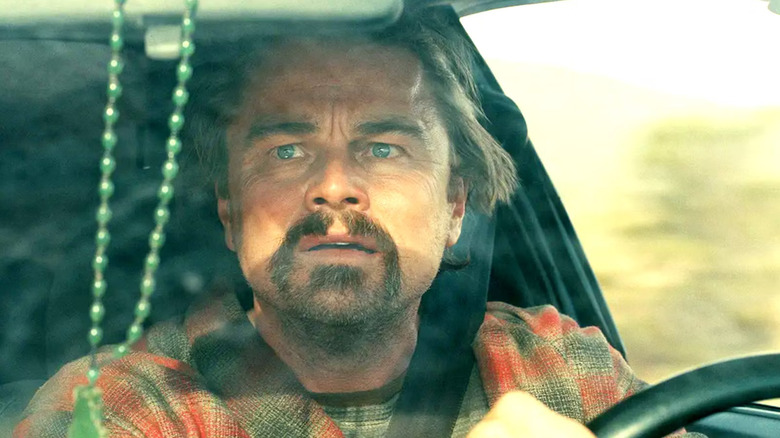
Even so, there's still going to be a variety of offerings in IMAX theaters that aren't uniform, so the best option for you, the moviegoer, is to do a little research beforehand, as one label does not fit all. For example, Paul Thomas Anderson's "One Battle After Another" was exhibited in IMAX 70mm film; however, it had been shot in VistaVision, so while it filled a 1.43:1 ratio throughout, it was not shot with or for IMAX. Ultimately, I think IMAX is a great way to experience a film no matter what, so no matter what label is attached to a movie, you're gonna have a good time.







 English (US) ·
  Indonesian (ID) ·