
 8 hours ago
Neon
We may receive a commission on purchases made from links.
Issues of abuse, cultural identity, xenophobia, and sticky political conundra have long been the métier of Romanian filmmaker Cristian Mungiu. He aims to put faces to hot-button issues, using a type of believable, cluttered, elegant kitchen-sink-style filmmaking to present his suffering, prejudice-inflicted characters with a humane eye. Mungiu exploded onto the global scene in 2007 with his Palme d'Or-winning film "4 Months, 3 Weeks and 2 Days," a film about two roommates who go on a quest to get an abortion. His 2022 film "R.M.N." (which we reviewed here) is based on a real-life incident in Romania wherein a small group of Sri Lankan immigrants were protested and forced to move out of town.
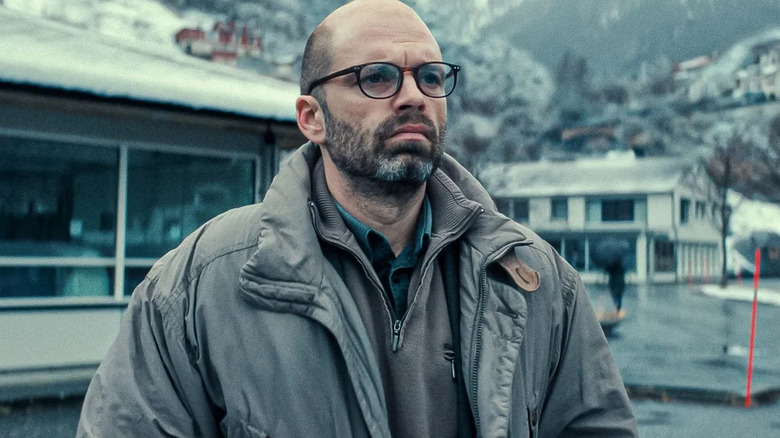
Mungiu's new film "Fjord," also a Palme d'Or winner, seemingly has a nuanced, both-sides view of what appears to be a sticky ethical situation. It's a film that, on its face, stems from cultural schisms and latent (or perhaps not-so-latent) xenophobia. "Fjord" is presented with the same matter-of-fact, frills-free style and photography as Mungiu's previous movies, and seems to be just as frank in its viewpoints. It also sports some exemplary performances from Sebastian Stan and Renate Reinsve as a married couple whose five children are taken away from them by the Norwegian Child Protective Services offices when they are accused (without solid evidence) of physically abusing them.
You may notice that I used a lot of qualifiers like "seemingly," "on its face," and "seems to be" in the preceding paragraph. That's because, in practice, "Fjord" is clumsy, mawkish, and pointedly one-sided, feeding into a global narrative of self-pitying persecution. It's a straw-man film about a vicious, queer-coded, ultra-woke state deliberately going after innocent, gentle couples just because they happen to be churchgoers.
Fjord is based on a true story
Neon
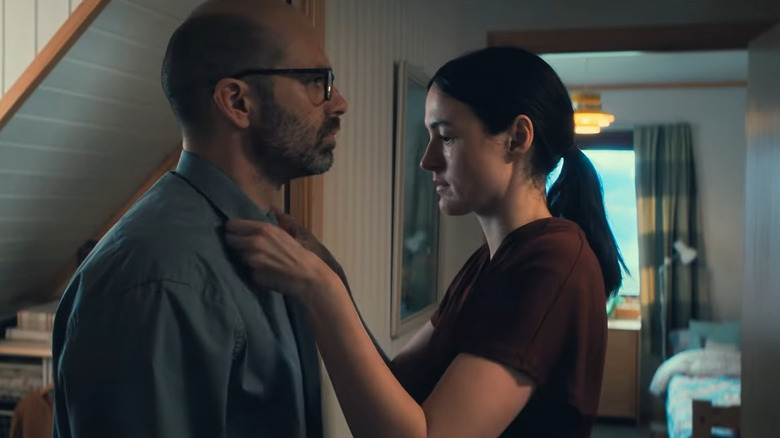
"Fjord" is a fictionalized version of the Bodnariu family, whose story you can read in Sherwood Dobson's book "Fjord: The True Story of Marius and Ruth Bodnariu, Their Children, and the Norwegian Family Separation Case." The film changes the central couple's names to Lisbet (Reinsve) and Mihai Gheorghiu (Stan), but keeps the broad strokes intact. Lisbet is Norwegian, and she has been raising her five children with her Romanian husband in Romania for many years. Financial necessity forces them to move to a small town in Norway where everyone knows each other; the Gheorghius are literally neighbors with Mats (Markus Tønseth), their kid's school principal.
Unusually for the neighborhood, the Gheorghius are conservative Christians who make it a point to pray every day, and who quiz each other on Bible stories. Norway is a largely atheist country, so many of the locals look at them askance when they do anything that could be interpreted as religious; early in the film, the young Gheorghiu daughter, Elia (Vanessa Ceban) idly stops to play a hymn on a school keyboard, and she is immediately admonished for proselytizing.
The Gheorghius are seen as somewhat saintly, at first. They are calm, quiet, and helpful. Lisbet works at the local coroner's office, and she offers aid to a mourning stranger. When Lisbet sees someone in distress, she stops and offers to help, reaching deep into her core and always finding a scrap of selflessness.
The story begins when a schoolteacher notices that Elia has a bruise on her back. The school officials call her and her older brother Emmanuel (Jonathan Ciprian Breazu) aside to ask if there is physical abuse at home. When they admit that there have been periodic light spankings, well, the state springs into action.
Fjord is mawkish propaganda
Neon
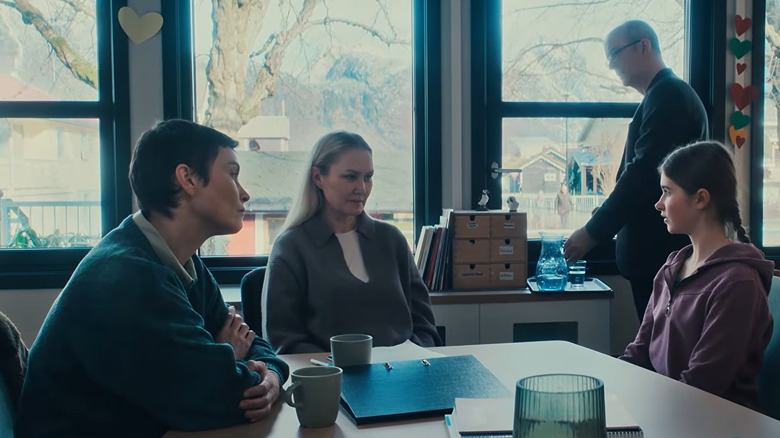
It seems that Norwegian Child Protective Services moves swiftly, and the same day Elia reveals "light slaps," the children are immediately taken away and placed in foster care. Like, before the end of the day. Mihai is visited by the police and has to sign a confession that slapping occurs at home. It's a chilly, efficient machine. The rest of the film constitutes the legal and emotional toll that Mihai and Lisbet have to pay to get their children back from a cold, misunderstanding state.
Cristian Mungiu would like the audience to believe that this is a story of cultural differences and the subtle judgment we make when viewing the parenting styles of those who don't agree with us, politically. "Fjord's" down-to-earth style and subtle performances certainly point in that direction. Mihai is presented as a stiff-bodied stoic, a man prepressing his outrage as much as he can, while Reinsve impresses us with her ability to not completely unravel.
But the film has a very definite point of view and a very pointed politic. It's a film full of straw men, set up to be knocked over by the conservative outrage machine. The Norwegian officials in "Fjord" are all presented as wrathfully "woke" villains who just hate, hate, hate any sign of Christian conservatism in their midst. The Norwegian CPS workers are presented as childless busybodies who have nothing better to do with their time than kidnap children and separate them from their well-meaning, God-fearing Christian parents. This is when they're not admonishing people for not adequately accepting their queer agenda.
The slapping (never depicted on camera, incidentally) is described in dialogue as the kind of gentle discipline that any parent might practice, like slapping a child's hand to get it away from a hot stove.
Fjord is not the nuanced drama it seems to think it is
Neon
The film is encouraging us to root for a repressed Christian family who is being pilloried for the "minor" crimes of slapping their children and teaching them anti-queer rhetoric. In one incident — again presented off-screen — the youngest Gheorghiu daughter tells a young classmate that she will go to Hell for being a lesbian. "Fjord," in keeping this scene in the margins, seems to be making a lot of excuses for the Gheorghiu family. They're just innocents being unfairly prosecuted.
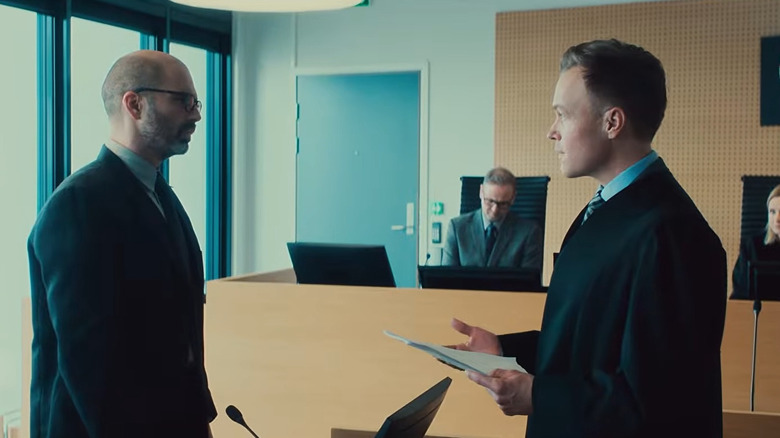
The prosecutor in the Gheorghiu case is a smug a-hole with impeccable hair who deliberately mispronounces their names and who puts their beliefs on trial. Isn't it true, he snarls, that Christians believe in abusing children? It's during the trial scenes that "Fjord" begins to resemble a Jack T. Chick tract (those ultra-conservative Christian comic books you might find on the floor of a public restroom). All the left-leaning characters are pretty unilattery bratty queer varlets and teeth-gnashing Karens.
"Fjord" dangles a tantalizing moral counterpoint about halfway through the movie when Mihai calls a conservative advocacy group in order to draw publicity to his case. It's not long before right-wing protestors are mobbing the courthouse, wailing about how Bitter Lesbian Norway hates Christians. For a moment, it seems like "Fjord" was going to be about two political extremes pushing each other further apart with violent, devious press-manipulating tactics; perhaps, one might be tempted to think, both sides of this debate are in the wrong. We've let our political beliefs warp us, and lost sight of our humanity. But then "Fjord" backs off, ultimately depicting the right-wing protestors as 100% in the right.
Fjord is a one-sided work of biased reporting
Neon
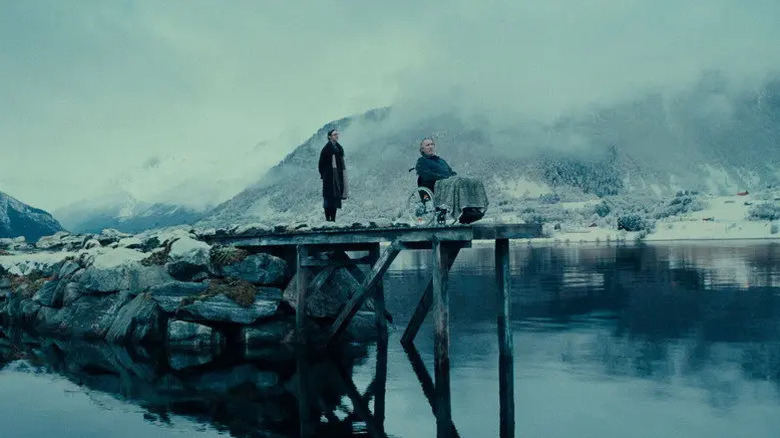
There are further little right-wing digs peppered throughout the movie. Mats, the school headmaster, has a few intimate scenes with his wife, Mia (Lisa Carlehed), wherein he whines about how Christianity has no place in the modern world, and that conservative values are just plain terrible. Mia, a lawyer, eventually becomes good friends with Lisbet and even agrees to defend her in court once the trial begins.
The most actualized character in "Fjord" is Noora (Henrikke Lund-Olsen), the teen daughter of the Gheorgius neighbors. Noora has been seeing a shrink, despondent over her life, and struggling with her own queerness. When she meets Elia, she falls in love pretty quickly, and Elia appears to return her affections. When Noora commits a shockingly casual act of self-harm early in the film, Elia and Emmanuel are there to immediately help her, and to keep her secrets. She's the "bad girl" of the neighborhood. Her friendship with Elia seems to be good for all of them, as Noora is finally happy, and Elia is finally being exposed to love from outside her bubble. Noora is even wise enough to track the teens when CPS takes them away, able to locate them and try to help the Gheorghius stay in contact. Noora will ultimately be the one to suffer the greatest tragedy.
"Fjord" is a one-sided work of biased reporting that vilifies CPS and shoulders a pathetic sense of self-pity, all under the guise of "cultural differences." It looks like something more important than it is. At its heart, it's another callow faith-based movie that doesn't give the genre a good name.
/Film Rating: 3 out of 10
"Fjord" opens in theaters on October 9, 2026.







 English (US) ·
  Indonesian (ID) ·