
 3 months ago
CBS
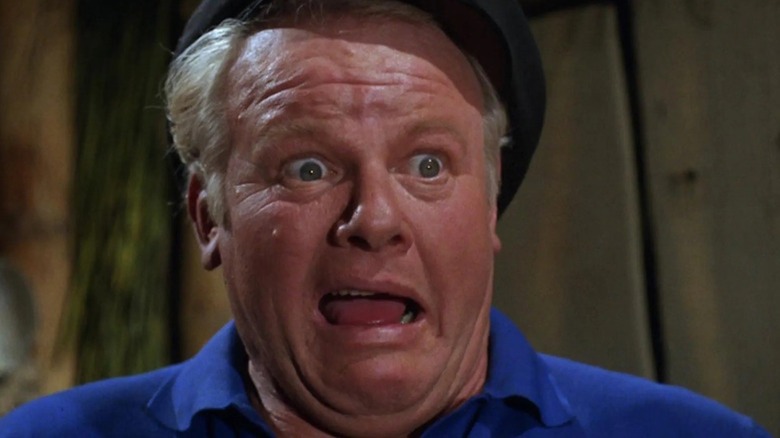
Before Alan Hale Jr. boarded the S.S. Minnow as the Skipper on "Gilligan's Island," he carved out a very successful career as a character actor. His father had done likewise starting in the silent era, so the ability to settle into an ensemble came naturally to the son. It wasn't thankless work in the least, but if Oscars and Emmys mattered to an actor, this may have been a less than ideal arrangement. Fortunately, Hale didn't care about all that. He was thankful for each role and was proud of his run as the Skipper because he and his castmates made people laugh. That was the only reason the show existed.
Still, he got to collaborate with some top-notch talent prior to that fateful three-hour tour, which makes you wonder if he ever harbored loftier goals. Indeed, he shared the screen with some of the biggest stars of his era: John Wayne, Gregory Peck, Clint Eastwood, James Garner, and Randolph Scott. He always looked comfortable in the saddle or on the battlefield as well, and, having watched these movies after I'd gorged on "Gilligan's Island" in syndication, I rarely felt I was looking at the Skipper.
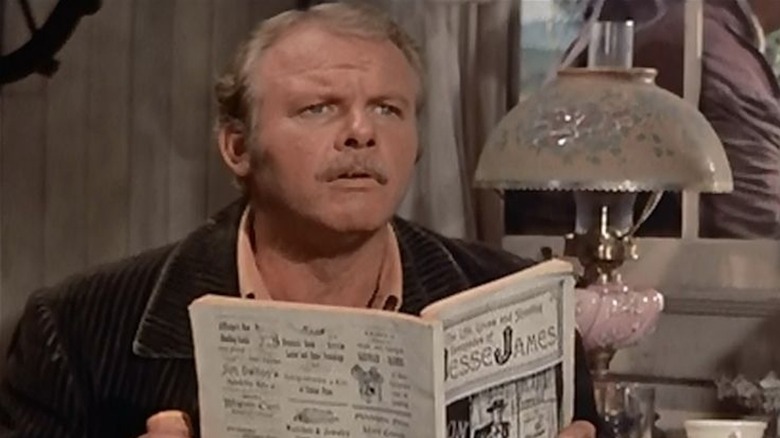
Hale was in some very good movies, but I don't think he ever appeared in a better one than Nicholas Ray's "The True Story of Jesse James." This isn't Ray's best work, but it's an unusually sharp Western written by Walter Newman (whose plague-laden "Harrow Alley" is considered by many to be the greatest unproduced screenplay of all time) and shot in glorious Cinemascope. It gave Hale the opportunity to play notorious outlaw Cole Younger, and, had the project been a little more blessed, it would've put him on screen with an all-time teen idol.
The True Story of Jesse James nearly paired Alan Hale Jr. with James Dean or Elvis Presley
20th Century Studios
"The True Story of Jesse James" is essentially a remake of Henry King's 1939 film "Jesse James," which starred Tyrone Power and Henry Fonda as the James brothers. Like King, Nicholas Ray depicts the titular murderous outlaw as a semi-sympathetic figure. This is likely because he originally envisioned his "Rebel Without a Cause" star, James Dean, in the title role. When Dean died in a car wreck in 1955, Ray instead turned his sights to Elvis Presley. It's certainly intriguing to consider what a director like Ray would've done with the young Presley, seeing as the musical legend had wanted to carve out a serious acting career à la Dean. (Elvis' notorious manager Colonel Tom Parker, who was infamously brought to gonzo life by Tom Hanks in Baz Luhrmann's "Elvis," would've no doubt disapproved.)
Alas, this never came to pass. Ray settled for Robert Wagner, a handsome, overly polished star who lacked so much as a scintilla of mystery. Fortunately, Ray had the colorful likes of Hope Lange, John Carradine, Agnes Moorehead, and, of course, Alan Hale to give his Western a bit of authenticity. Ray was ultimately unhappy with the experience, though, and he left Hollywood for Europe, but lesser Ray is better than most filmmakers' best. And Hale more than holds his own.


 English (US) ·
  Indonesian (ID) ·