
 4 months ago
Paramount
We may receive a commission on purchases made from links.
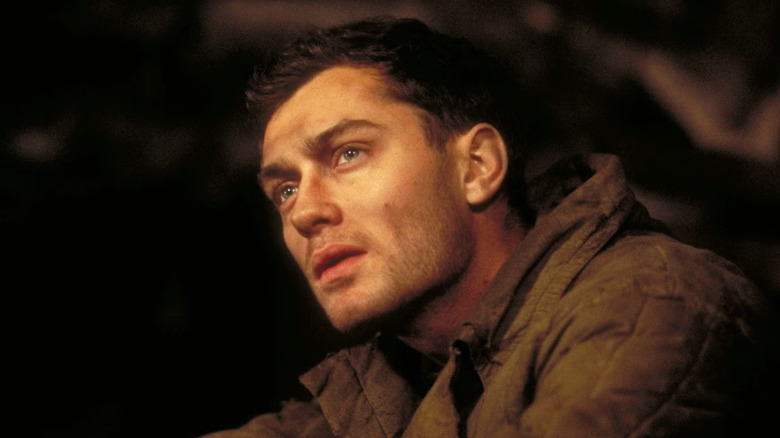
Few people may remember Jean-Jacques Annaud's World War II thriller "Enemy at the Gates," released in March of 2001, which is a little baffling, given the premise and the cast. Based on William Craig's 1973 book "Enemy at the Gates: The Battle for Stalingrad," Annaud's film told the story of Vasily Zaitsev, a real-life Russian sniper who killed hundreds of enemy combatants at said Battle in 1942. The film noted that he had something of a rival in the form of the expert German sniper Erwin König. The story goes that Zaitsev was doing such a good job of killing Nazis that the German government enlisted König, a sniping instructor, to come to the Battle of Stalingrad specifically to kill Zaitsev.
According to the War History Online website, however, König may not have been a real person, and was invented by the Soviet Army as a scary boogeyman that their heroic Zaitsev killed. The matter is further muddied by Zaitsev himself, who, in his autobiography "Notes of a Russian Sniper," recounted a three-day standoff with this mysterious König. He might have made it all up, though.
Annaud's film, however, is more interested in the myth than historical accuracy, and cast Ed Harris as the mysterious König. In a curious casting twist, the central Russian characters were all played by British actors, and the German lead was played by an American. One can extrapolate all kinds of political meaning behind that casting, coming as it did from a French filmmaker.
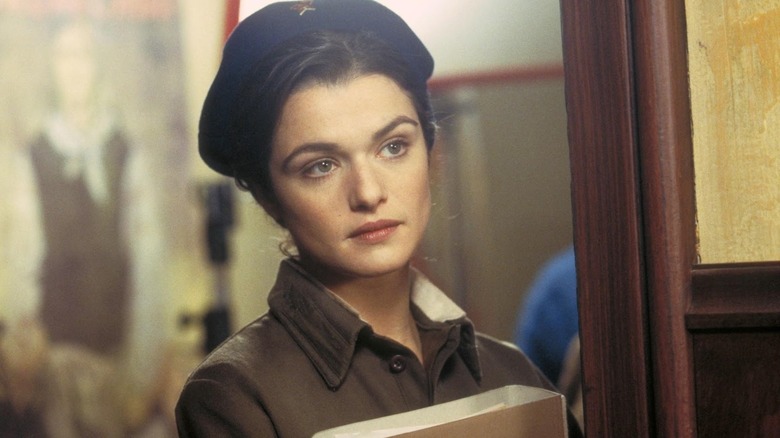
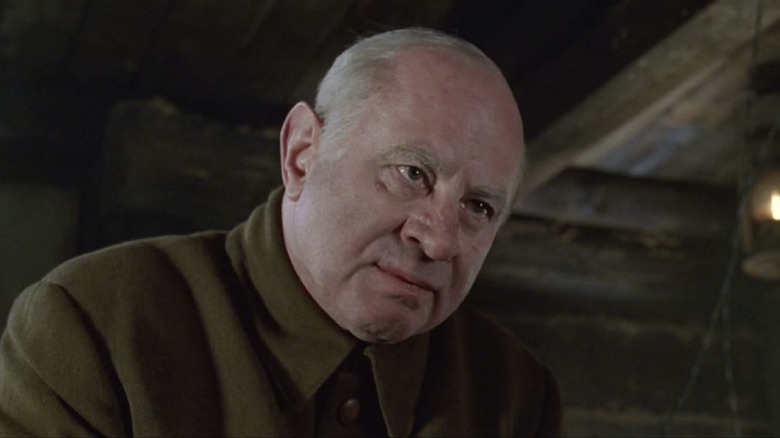
Jude Law played Vasily Zaitsev, Joseph Fiennes played his comrade Danilov, and Rachel Weisz played fellow (real-life) sniper Tania Chernova. The late, great Bob Hoskins clearly had a ball playing Nikita Khrushchev. The film was a modest hit. It's currently available on Paramount+.
Enemy at the Gates is a WWII film about dueling Russian and German snipers
Paramount
"Enemy at the Gates" is just as much about authoring effective propaganda as it is about wartime action. It should be noted that the movie is, in classic Hollywood fashion, not the least bit historically accurate. Even the on-screen maps are incorrect. "Enemy at the Gates" deals with some real people, but fudges a lot of the details.
In the film, Joseph Fiennes' Danilov witnesses Vasily Zaitsev murder a few fleeing Germans in the middle of the Battle of Stalingrad (a skirmish that lasted six months, by the way). Danilov later meets Khrushchev, learning that the Russian leader has been trying to command the Soviet army through fear and intimidation, and the threat of punishment. Danilov suggests that they instead use Zaitsev as a "hero" that other Soviets can look up to, inspiring them rather than terrifying them. Khrushchev agrees.
Zaitsev is enlisted in the sniper division, where both he and Danilov form a classic love triangle with Tania Chernova. One might be reminded of Hollywood classics like "Wings" (one of the best World War I movies ever made), only told from a Russian perspective.
The Russian snipers do such a good job that the Germans, as mentioned, enlist their own super-sniper in the form of König. König takes out many Russian snipers, so Zaitsev enlists other friends (including one played by Ron Perlman) to help in a counter-attack. The film will climax in a grim snipe-off between Zaitsev and König and will involve some brave sacrifices and scenes of the snipers getting the drop on one another. "Enemy at the Gates" is melodramatic Hollywood hooey, of course — it was never presented as Oscar bait — but it's an entertaining Saturday afternoon matinee.
What did critcs think of Enemy at the Gates?
Paramount
"Enemy at the Gates" wasn't deeply beloved at the time, earning a 53% approval rating on Rotten Tomatoes, based on 139 reviews. Derek Elley's review for Variety was wholly negative, opening by saying that war is Hell ... and that some war movies are too. He wrote that the film had "a consistent inability to generate any kind of drama when characters open their mouths, as well as suffering from some spectacular miscasting in its higher reaches."
Roger Ebert, however, gave the film three stars, admiring the arc of the film's action. It began with its biggest battle sequence, and climaxed in a quiet one-on-one battle between the film's two central snipers. Ebert admired Jean-Jacques Annaud's sense of spatial continuity, and felt that the opening battle sequence could be compared to "Saving Private Ryan." He wasn't so fond of the love triangle plot, saying that adding to an already-taut story is kind of a shame.
Some light internet research revealed that some Russian veterans actually demanded that "Enemy at the Gates" be banned because it was so very inaccurate to the actual details of the Battle of Stalingrad, and made up some outright lies for storytelling purposes. Notably, the Russian commanders were said to lock up soldiers and humiliate them to prevent them from deserting, which was not the least bit true.
On a $68 million budget, "Enemy at the Gates" made a decent $97 million at the box office, but perhaps the middling reviews and lack of American characters prevented it from sticking in the cultural memory. Perhaps it still felt too much like Soviet propaganda. But if we ignore the real world and admire only the melodramatic storytelling, "Enemy at the Gates" is fine.






 English (US) ·
  Indonesian (ID) ·