
 3 months ago
Static Media
Authorship in Marvel and DC superhero comics is a tricky thing. As the characters and series go through a revolving door of writers and artists, it can become a nigh-impossible task to pin down a definitive creator. Tom King, writer of the movie-inspiring "Supergirl: Woman of Tomorrow," argued on Twitter in 2019 that some later Batman writers/artists — Dennis O'Neil & Neal Adams, Steve Englehart & Marshall Rogers, and Frank Miller — deserve credit as co-creators of Batman. "At this point their contributions to who 'Batman' is equal and maybe surpass [Bob] Kane/[Bill] Finger," King claimed.
The best evidence for King's argument, though, might rest with the X-Men. Stan Lee and Jack Kirby created the X-Men, yes, then Len Wein and Dave Cockrum introduced Wolverine, Storm, Nightcrawler et al in 1975's "Giant-Size X-Men" #1. But it was Chris Claremont's titanic 16-year run on "X-Men" (1975-1991) that made the X-Men who they are.
All the most famous "X-Men" storylines are Claremont's and he co-created dozens of enduring characters. A key example of Claremont's as the X-Men's spiritual creator is Magneto; Claremont reimagined the villain as a Holocaust survivor and an antihero. For all intents and purposes, Claremont created Magneto as we know him today.
The animated "X-Men '97" continues to lean on Claremont (including his Magneto backstory) and the upcoming Marvel Studios "X-Men" films will too. Perhaps, though, Hollywood should look deeper into his bibliography, because Claremont has other books besides "X-Men" — and we don't mean his "Willow" sequel novels.
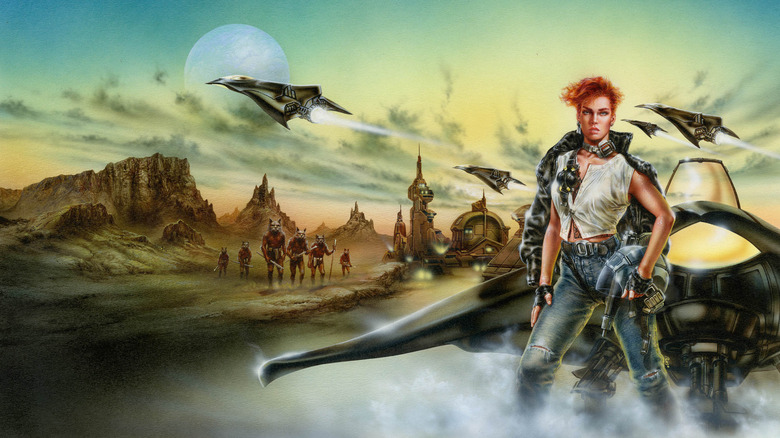
In 1987, in between the "Mutant Massacre" and "Fall of the Mutants," Claremont's novel "First Flight" was published. A military-themed science-fiction book starring U.S. Air Force pilot Nicole O'Shea, it was followed by two sequels: "Grounded!" in 1991 and "Sundowner" in 1994, leaving enough material for any potential film trilogy.
First Flight could be a movie mixing Top Gun and Star Trek
Ace Books
When Chris Claremont was writing "First Flight," "Top Gun" had recently become the biggest movie in the world. The novel's hero working as a jet pilot feels inspired by that, even though Lt. O'Shea being a badass woman is pure Claremont.
While "First Flight" is set in the future, it's the near future. Humankind is only starting to reach out into the stars, and Nicole is piloting the spaceship Wanderer on a mission through the solar system. During the flight, space pirates called The Wolfpack attack and damage the ship. Nicole and co. are saved when fate brings them into first contact with the feline Halyan't'a. The subsequent two books focus on a slowly-building alliance between humanity and Halyan't'a, all while following Nicole's continuing adventures.
Though he's most famous for writing comics, Claremont feels right at home being a prose writer. His "X-Men" is famous for verbose characters and, if he wanted to, he could fill an entire comic page with narration alone. His history with Marvel channels itself into the story, too, and not exclusively "X-Men," either.
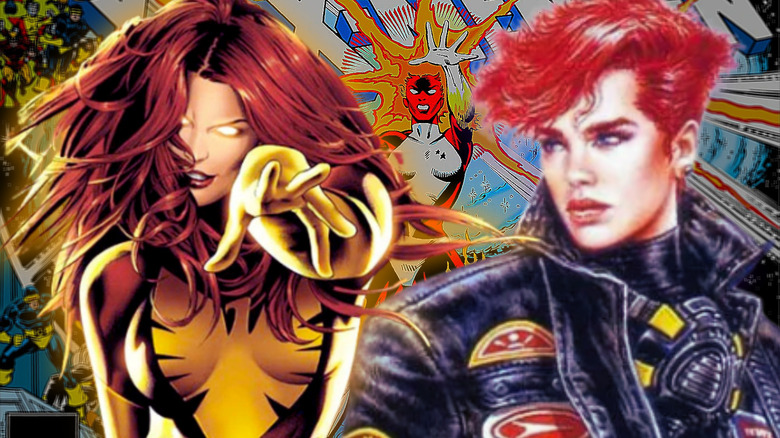
Claremont also wrote "Ms. Marvel" in the late 1970s, and then made Carol Danvers a recurring character in his "X-Men" run. Rogue can fly and punch through Sentinels because, back when she was a villain, she absorbed Carol's powers. Nicole Shea, a female Air Force pilot gets swept up in alien adventure, is a character in Ms. Marvel's image. Claremont's "X-Men" stories often featured aliens, too; his famous "Phoenix Saga" and subsequent "Dark Phoenix Saga" both starred the imperious Shi'ar.
"First Flight" and its sequels sit out of print, but for any Hollywood writer or executive seeking the next big female-led sci-fi franchise, the paperbacks are worth tracking down.



 English (US) ·
  Indonesian (ID) ·