
 5 hours ago
Warner Bros.
Adam Wingard first started directing features in 2007 with "Home Sick," a twisted little horror movie that played at the Fantasia International Film Festival. After that, Wingard spent the next several years building up a certain amount of horror cred with low-budget films like "Pop Skull," "A Horrible Way to Die," and "Autoerotic." He was really thrust into the public eye in 2011, however, with the release of "You're Next," a vicious and visceral home invasion film that starred Sharni Vinson. He chased that with the Captain-America-Gone-Wrong feature "The Guest" starring Dan Stevens. "The Guest" was one of the best movies of 2014, and Wingard's new film, "Onslaught," takes place in the same universe.
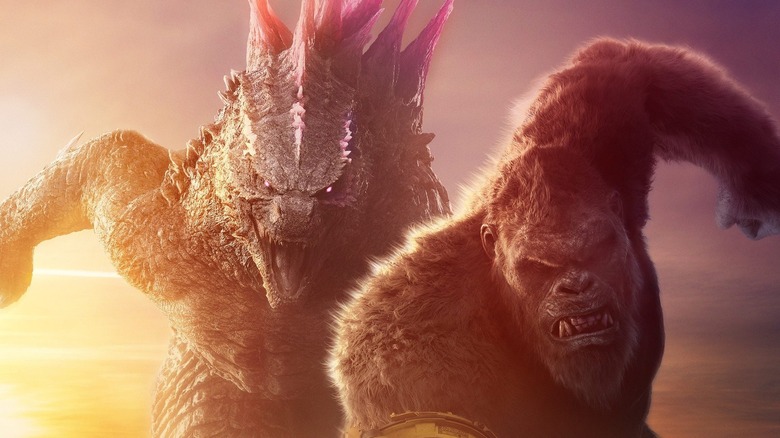
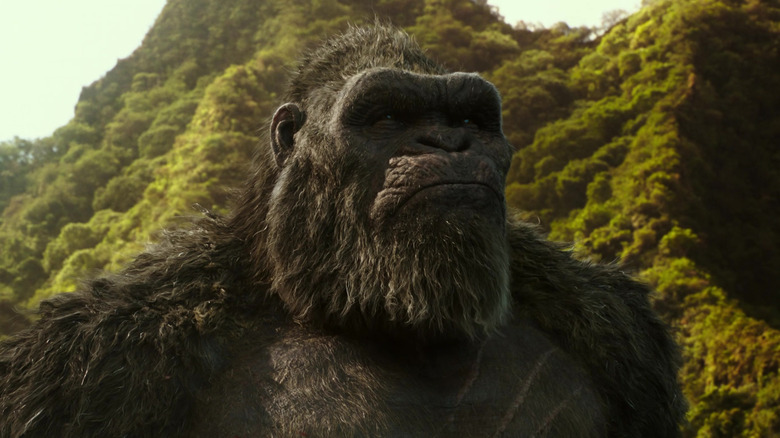
After that, studios took notice, and Wingard was tapped to direct "Blair Witch," the second theatrical sequel to "The Blair Witch Project." He adapted the manga series "Death Note" and hit the big time in 2021 by directing "Godzilla vs. Kong," a $200 million FX-based blockbuster about the two titular beasties wailing on each other. It was wild and absurd, and it made $470 million. Unlike the American Godzilla films that preceded it, Wingard's "GvK" remembered to be playful and unrealistic. It's a movie about a giant radioactive dinosaur-like monster fighting a massive ape, after all. Wingard then returned in 2024 with "Godzilla x Kong: The New Empire," an even wilder, more absurd ultra-blockbuster. It made over $572 million.
/Film's own Ben Pearson recently interviewed Wingard, who revealed that his two "Godzilla" movies were a major source of stress. Notably, he felt he had to fight against studio expectations regarding the score. Wingard's movies tend to feature moody, John Carpenter-like scores performed on synthesizers and eschew the more traditional orchestral scores used in most movies.
Adam Wingard was cautious about the type of music he wanted
Warner Bros.
Adam Wingard's scores certainly don't sound like most blockbusters. There are many reasons why so many blockbusters tended to have very similar music in the 2020s, with much of it stemming from how modern movies were made. While a film is being edited, for instance, the filmmakers will typically drop in temporary placeholder music tracks to give them a sense of how the music would function in a scene. The placeholder tracks, however, tend to come from other movies. When filmmakers fall in love with the placeholder music, they might ask the film's actual composer to orchestrate something similar. Boom, you have a generation of blockbusters lacking in unique, hummable scores.
Wingard likely internalized the "blockbuster sound" and admitted that his own musical preference ran counter to it. He likes synths, not violins. For his Godzilla flicks, Wingard succumbed to pressure, and didn't allow himself to include as much of the type of music he liked. In his words:
"[T]he hardest part about doing Godzilla movies for me is that ... I mean, we had electronic components in the score, but not much more than a Hollywood movie might utilize, really, at the end of the day. And it just felt like we didn't have the backing, the confidence, in that type of thing for a Godzilla movie because there's sort of an expectation of big orchestral stuff. So I felt like I was a little out of my element on that one because I wasn't able to do that, because ultimately I just like the way this [synth-heavy electronic music] sounds."
Tom Holkenborg, a.k.a. Junkie XL, provided the music for both of Wingard's "Godzilla" movies, and was joined by Antonio Di Iorio for "New Empire."
Adam Wingard's Godzilla experience
Warner Bros.
Adam Wingard noted elsewhere in the same interview with Ben Pearson that blockbusters were a very different creative process from his more personal horror movies. Wingard knew how to navigate the world of big-money movies, but also understood that he was serving nostalgia for the material, not making something from his own mind. In his words:
"When I was in the franchise IP world, all the decision-making was more or less based on nostalgia and just excitement for being able to put my stamp on something. And you can put yourself in that, but it's not necessarily a personal story."
He added later:
"To me, having made a bunch of Godzilla films, you want to take an interesting idea as far as you can, but every choice has to be under the consideration of what will a studio actually let me do? I want to do an idea that's all the way over here [holds hand to the far left], but even when I'm planning it, I have to know that at best I'm going to get here [moves hand to the middle]. You know what I mean?"
Wingard hastened to explain that he actually likes his two Godzilla movies and is very proud of them. He just realized, while making them, that a certain degree of personal creativity will necessarily be stifled by the very nature of how these types of movies are made. He wants to be way out on the fringe, but understands that "a little off-center" is about as kooky as he'll be allowed to get. Luckily, with "Onslaught," Wingard is working with a relatively small budget again, and presumably had the freedom to include whatever music he wants.




 English (US) ·
  Indonesian (ID) ·