
 10 hours ago
Neon
Let nobody accuse writer/director James Gray of failing to cast a wide net. "Paper Tiger" opens with an ominous quote taken from Greek antiquity ("Let there be wealth without tears; enough for the wise man who will ask no further," attributed to the playwright Aeschylus in "Agamemnon"), builds out a gritty crime drama evoking "The Godfather" or any number of Martin Scorsese's early works, and then proceeds to spend most of its 115-minute runtime blending domestic strife with Shakespearean stakes. Then again, this is nothing new to anyone who's followed the scrutable filmmaker since the days of "The Yards" and "We Own the Night" all the way up to 2022's "Armageddon Time."
No, there's something even more personal driving the action of "Paper Tiger," which somehow feels like the perfect synthesis of many of the acclaimed filmmaker's most pressing interests over the years. Not everyone can be as much of an open book as Steven Spielberg, and fewer still translate such pop-culture cachet into a semi-autobiographical therapy session as undeniably resonant as "The Fabelmans." What Gray accomplishes here might be relatively more niche and far less sentimental, but that's the entire point. This saga of two brothers drawn into the seedy underbelly of New York City, run by Russian mobsters willing to do anything to protect their interests, is gritty and uncomfortable and filled with dread — with only the barest hint of a light at the end of the tunnel. And it's exactly the type of storytelling mode within which Gray operates best.
"Paper Tiger" isn't merely a boon to fans of whip-smart, unbearably tense thrillers; it rewards anyone who's ever fallen down the rabbit hole of a favorite director's filmography. This is a skeleton key unlocking what makes a visionary talent tick. And it's absolutely riveting.
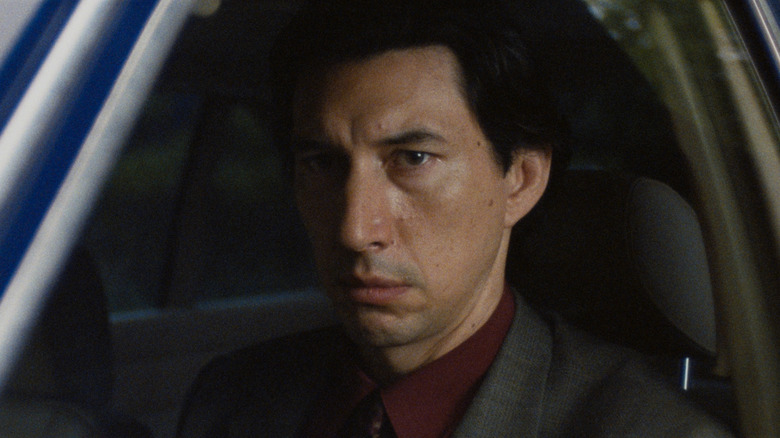
Adam Driver remains a star at the top of his game in the impeccably-cast Paper Tiger
Neon
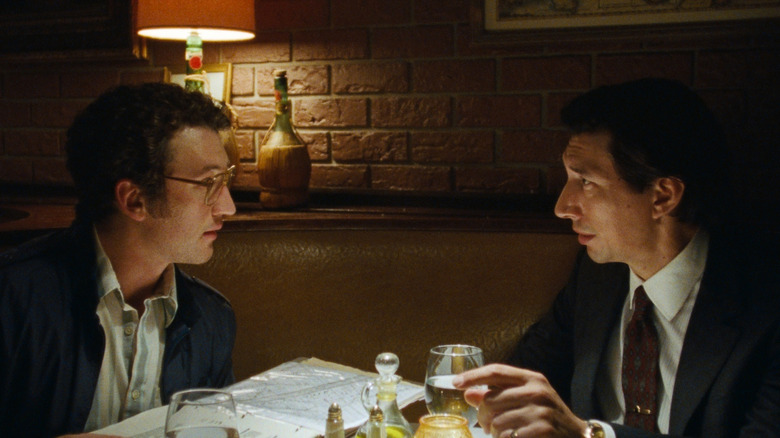
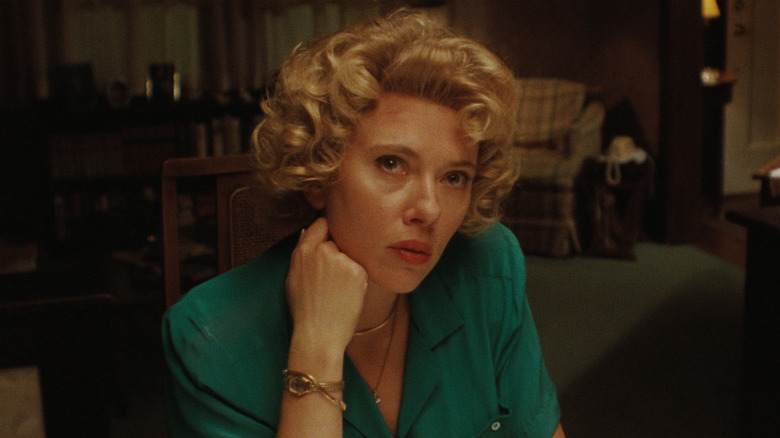
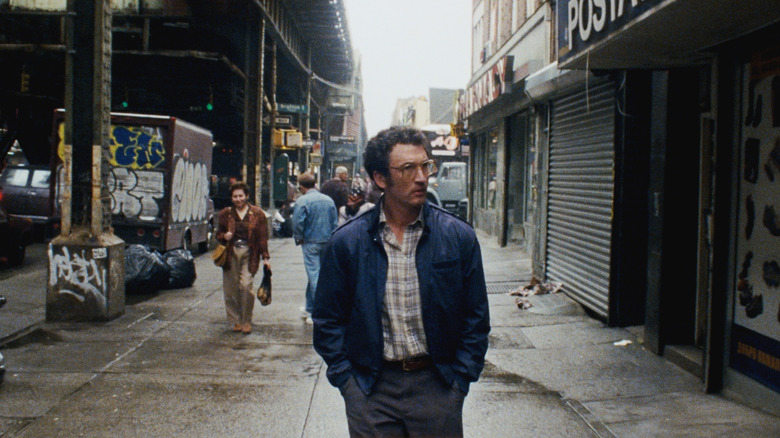
"Paper Tiger" is set in 1986 New York City, during a moment of prolonged (and awkward) transition between eras. Irwin Pearl isn't anyone noteworthy at first blush, as a mild-mannered engineer running a comfortable middle-class business and perfectly content with his lot in life. Miles Teller brings him to life with pure dad-mode cheese, balanced perfectly opposite Scarlett Johansson as his quietly aspirational wife Hester. They've built a nice enough life in Queens, even if their two high school-aged sons Scott (Gavin Goudey) and Benjamin (Roman Engel) grouse about having to put up with broken-down cars and roll their eyes at Irwin's expectations of an Ivy League college education.
Into this mirage of domestic bliss steps Irwin's whirlwind of a brother: rich, good-looking, divorced, and former NYPD cop-turned-entrepreneur Gary. Adam Driver quickly proves to be the straw stirring this drink, showing up at the Pearl residence with an expensively catered dinner in tow and eager to convince his adoring sibling of an opportunity of a lifetime. The Gowanus Canal is currently on the precipice of a real-estate gold rush and there's no shortage of money to be made off the backs of the newly-arrived Russian mob. (This movie couldn't possibly be more authentically New York City-coded, even if it had dirty, polluted Hudson River water running through its veins.) Determined, bright-eyed, and hopelessly in over his head, Irwin soon gets sucked in by Gary's charms and inadvertently enters an unfamiliar world — one that he naïvely admits he never knew existed.
From this point on, "Paper Tiger" essentially becomes a three-hander between Driver, Teller, and Johansson, but it's Driver who embodies the boundless momentum, irresistible allure, and tragedy that's to come.
Paper Gray is another James Gray masterwork
Neon
The dramatic tension of "Paper Tiger" comes not from unexpected twists or manufactured melodrama, but from the consequences that we know will arrive sooner than later. One fateful moment of succumbing to a bruised ego is all it takes. Irritated by his sons' dissatisfaction with their modest economic station, Irwin brings Scott and Benjamin along on an impromptu trip to the Canal to prove that he and Gary are working on something big. This "nighttime risk assessment" goes horribly wrong, however, when he stumbles upon a scene he clearly isn't meant to see and all three end up on the wrong end of Russian intimidation tactics shaking them all to their core ... but it's only the start of their nightmare.
While an ongoing subplot with Hester at least gives Scarlett Johansson plenty of material to chew on (which she does quite well, convincingly portraying a woman fracturing from the inside out), this tense and hellish middle act is clearly where Gray is most at home. Like many of his best works, "Paper Tiger" is set within an inherently compelling time and place in history, finds the broader thematic subtext with which to load the script, and simply lets his characters loose in an ever-spiraling maze of their own making.
The nonstop character drama is breathless enough to command our full attention, but it's only the surface of the film's artfulness. Viewers may not even notice the warm tones of cinematographer Joaquín Baca-Asay's images (shot in 35mm film) shifting ever cooler as the film goes on, or the dialogue bleeding from one scene into the next, or the soundscape mixing the noises of the city into composer Christopher Spelman's orchestral score. But it all adds up to another James Gray masterwork.
Paper Tiger is part Greek tragedy, part Hitchcockian thriller, part cautionary tale about the dangers of ennui
Neon
While not necessarily a "feel-bad" film, there's a sense of restfulness and melancholy that pervades much of "Paper Tiger." Drawn from James Gray's personal upbringing (which would neatly place him as one of Irwin's young and traumatized sons), the narrative lends itself to a relentless moodiness and dour tone — though one punctuated by several moments of character-based humor. That instinct ends up being the correct one, as Gray goes on to stage multiple barnburner set pieces where even the faintest threat of violence does more to inspire fear and worry than countless action or horror films. One standout takes the shape of a home invasion sequence, drenched in pitch-black shadows and silhouettes as Irwin's choices bring danger right to his doorstep.
"Paper Tiger" embraces the Greek tragedy at its core, revels in the thrills of following in Alfred Hitchcock's footsteps, and never loses sight of its most cutting concern: the harm wrought by feelings of ennui. Yet, at no point does the script judge its characters or cast aspersions on their increasingly desperate circumstances. Gray's latest film continues his streak as one of our most humanist storytellers around, empathizing with the shortcomings and flaws of these all-too-personal characters while refusing to shy away from the darkness their actions wrought.
This is original, maverick, visionary filmmaking at its best — in other words, precisely the kind of adult-minded story we need far more of these days.
/Film Rating: 8.5 out of 10
"Paper Tiger" hits limited U.S. theaters on November 13, 2026, followed by a wider release on November 20, 2026.


 English (US) ·
  Indonesian (ID) ·