
 2 months ago
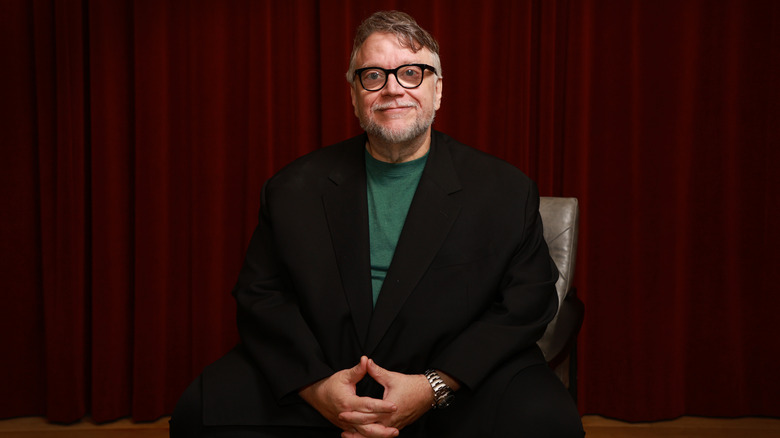
Lia Toby/Getty Images
Guiillermo del Toro is synonymous with cinematic monsters. Thanks to his maximalist imagination and empathy for outsiders, no-one is better or more consistent at crafting fantasies about people who don't fit in. He's also achieved mainstream success without sacrificing his eccentricities or love for the B-movie genres. "The Shape of Water," his spin on "Creature from the Black Lagoon" in which the fish-man is the romantic lead, became a Best Picture winner.
Born in Guadalajara, Jalisco, Mexico on October 9, 1964, del Toro was raised in a Catholic Spanish family. That family was hit by some extraordinary good luck during his childhood. His father, Federico del Toro Torres, won a $6 million lottery in 1969, and soon the del Toros were living in a large mansion. One of the mansion's features was an enormous library shelved with classic literature, and del Toro claims to have read every book in it.
Del Toro has described his father as a "blue collar" guy who demanded his children work towards their ambitions. Indeed, one book that forever changed young Guillermo del Toro's life was one that he saved up money to purchase himself: a Spanish edition of Mary Shelley's "Frankenstein," which he sought after James Whale's classic "Frankenstein" movie dazzled his young mind.
Del Toro began making short films on a Super 8 camera when he was eight. His first feature was 1993's "Cronos," one of the most unique vampire movies you'll ever see. His family's financial standing extended him the privilege to immerse himself in art, and in response to his strict Catholic upbringing, he's an anti-authoritarian to his core. Those traits, wrapped together with imagination, make del Toro one of the most singular filmmaking voices we have working at the heights he does — and also make him highly quotable.
Quote of the Day by Guillermo del Toro
Static Media
"You only find yourself when you disobey. Disobedience is the beginning of responsibility, I think."
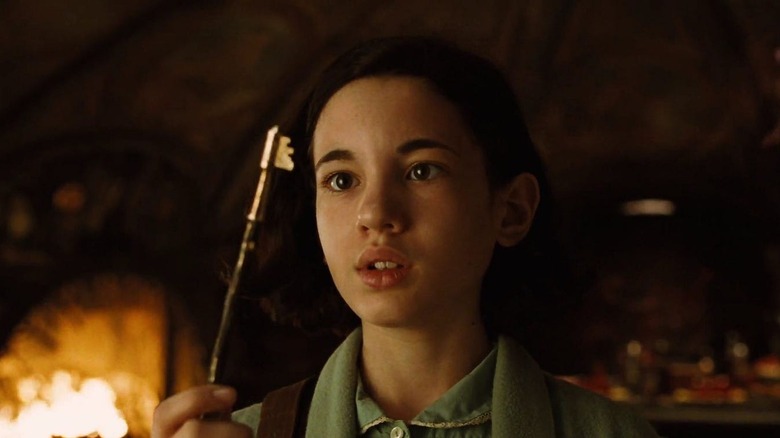
Guillermo del Toro said this in a 2007 interview with the A.V. Club, coming off the massive success of his 2006 Spanish-language fantasy film "Pan's Labyrinth." The quote is specifically entwined with that film: "'Pan's Labyrinth' is definitely a movie in favor of disobedience," del Toro said. It's a film set in 1944 Spain, when the country was ruled by dictator Francisco Franco. There are two stories: one about imaginative little girl Ofelia (Ivana Baquero) and the other about anti-fascist rebels in hiding. These stories share a villain: Vidal (Sergi López), Ofelia's stepfather and a brutal captain in Franco's military.
In "Pan's Labyrinth," Doctor Ferreiro (Álex Angulo) tells Vidal that "To obey — just like that — for the sake of obeying, without questioning ... That's something only people like you can do, Captain." Ofelia is given three tasks by a magical Faun (Doug Jones). When completing each one, she disobeys someone. After her selfless disobedience the third time, she's rewarded. So, del Toro thinking disobedience is "the beginning of responsibility" isn't surprising at all.
"Pan's Labyrinth" taught me essential lessons about filmmaking, but I'll admit its social lesson of virtuous disobedience is one I've sometimes faltered in following. You don't have to have a literal fascist psychopath breathing down your neck for del Toro's quote to apply. It takes courage to disobey in even small ways, because all the responsibility for the consequences falls on your shoulders. It requirees understanding that the authority demanding obedience may not have the best intentions. Moving through life, it's so much easier to follow structured paths laid before you ... but then you might never chart a path all your own.
Deeper meaning of Guillermo del Toro's quote - If authority is unjust, so is obedience to it
Warner Bros.
Asked about the political aspects of his films during this A.V. Club interview, del Toro called his films "parables" (which are about "things that are relevant in the past, the future, and the present") rather than "pamphlets" (i.e. trying to enact a specific, very current agenda). "Pan's Labyrinth" is indeed both set in a specific historical moment yet also timeless.
Guillermo del Toro may not be filming "pamphlets" but it'd be foolish to say his politics don't shape his art. "I hate structure, I am completely anti-structural in terms of believing in institutions," del Toro has said. Even when he makes a superhero movie, del Toro noted, he picks "freaks" like Blade or Hellboy. In a del Toro movie, a horned, red-skinned demon can be a hero, but a villain is someone like Vidal: a clean-cut fascist with a tightly-wound pocket watch.
Vidal's watch is a plausible reference to the myth that Italian dictator Benito Mussolini kept the trains running on time. When del Toro adapted "Pinocchio," he reinterpreted the island that turns little boys into donkeys as a boot camp for Mussolini's army.
There's also the original authority everyone experiences: fathers. Del Toro's leads, from Hellboy to Ofelia, rebel against those too. Hellboy is the son of a great evil who chooses to spite destiny and save mankind. Del Toro infused "Frankenstein," a story about a parent's responsibility, with new themes about breaking cycles of abusive fatherhood.
In del Toro's 2015 gothic drama "Crimson Peak," heroine Edith Cushing (Mia Wasikowska) pushes back against constraints on Victorian womanhood and writes novels. Being an artist is itself an act of rebellion, for creation takes responsibility and the sacrifice of a structure's stability.
More quotes by Guillermo del Toro
Featureflash Photo Agency/Shutterstock
- "I love monsters. If I go to a church, I'm more interested in the gargoyles than the saints. I really don't care much about the idea of normal — that's very abstract to me. I think that perfection is practically unattainable but imperfection is right at hand. So that's why I love monsters: because they represent a side of us we should actually embrace and celebrate."
- "American theatres in the South rejected the first ['Hellboy'] movie, refused to play it, because the word 'hell' was in the title. [...] I find it really puzzling that we are not prudish about the deforestation of the Earth, bombing other countries, killing children, raping entire continents, but we are prudish about one word."
- "AI, particularly generative AI — I am not interested, nor will I ever be interested. I'm 61, and I hope to be able to remain uninterested in using it at all until I croak. ... The other day, somebody wrote me an email, said, 'What is your stance on AI?' And my answer was very short. I said, 'I'd rather die.'"
-
"There are maybe 10 characters in the history of storytelling that are capable of being universal and completely adaptable to anything. There's Frankenstein, Pinocchio, Tarzan and Sherlock Holmes. Those are characters where, even if you haven't read the story, you know the story, or you think you know the story.
- "You live and die two or three times making a movie. First, you write it, and the first pivotal moment comes when you can get it made. The second is in the process of making it, when the movie reveals itself to you, its flaws and its virtues. Then the most unnerving moment is when that movie is then launched into the world."




 English (US) ·
  Indonesian (ID) ·