
 14 hours ago
After nearly a year in limbo and a lead actor’s retirement, tvN’s long-awaited sequel to one of Korean television’s most acclaimed crime thrillers will air as originally shot. The network says that doesn’t mean it’s looking away from the controversy that nearly buried it.
Ten years is a long time to wait for a sequel. For fans of Signal the 2016 time-bending crime drama that remains one of the most acclaimed series in tvN’s history the wait for The Second Signal has stretched even longer than that, and for reasons nobody saw coming. On November 6, tvN finally confirmed a premiere date: December 7. But the announcement arrived wrapped in a statement addressing something far thornier than scheduling what to do when a show is finished, but one of its stars no longer should be part of its legacy.
The Drama That Started It All
To understand why this sequel carries so much weight, you have to go back to the original. Signal, written by Kim Eun-hee and directed by Kim Won-seok, premiered on tvN in January 2016 and became an instant genre landmark. Inspired partly by real unsolved Korean crimes, including the infamous Hwaseong serial murders, the series followed a modern-day profiler (Lee Je-hoon) who discovers a walkie-talkie that lets him communicate across time with a detective from 1989 (Cho Jin-woong), alongside a police officer bridging both eras (Kim Hye-soo). It was tense, emotionally devastating, and critically adored the kind of show that gets cited a decade later whenever anyone makes a “best Korean dramas ever” list.
A sequel reuniting that same core team Kim Eun-hee writing, Cho Jin-woong, Lee Je-hoon, and Kim Hye-soo all returning was always going to be an event. It was positioned as a centerpiece of tvN’s 20th anniversary programming this year, a symbolic full-circle moment for a network celebrating two decades on air with the same creative voices that helped define its identity.
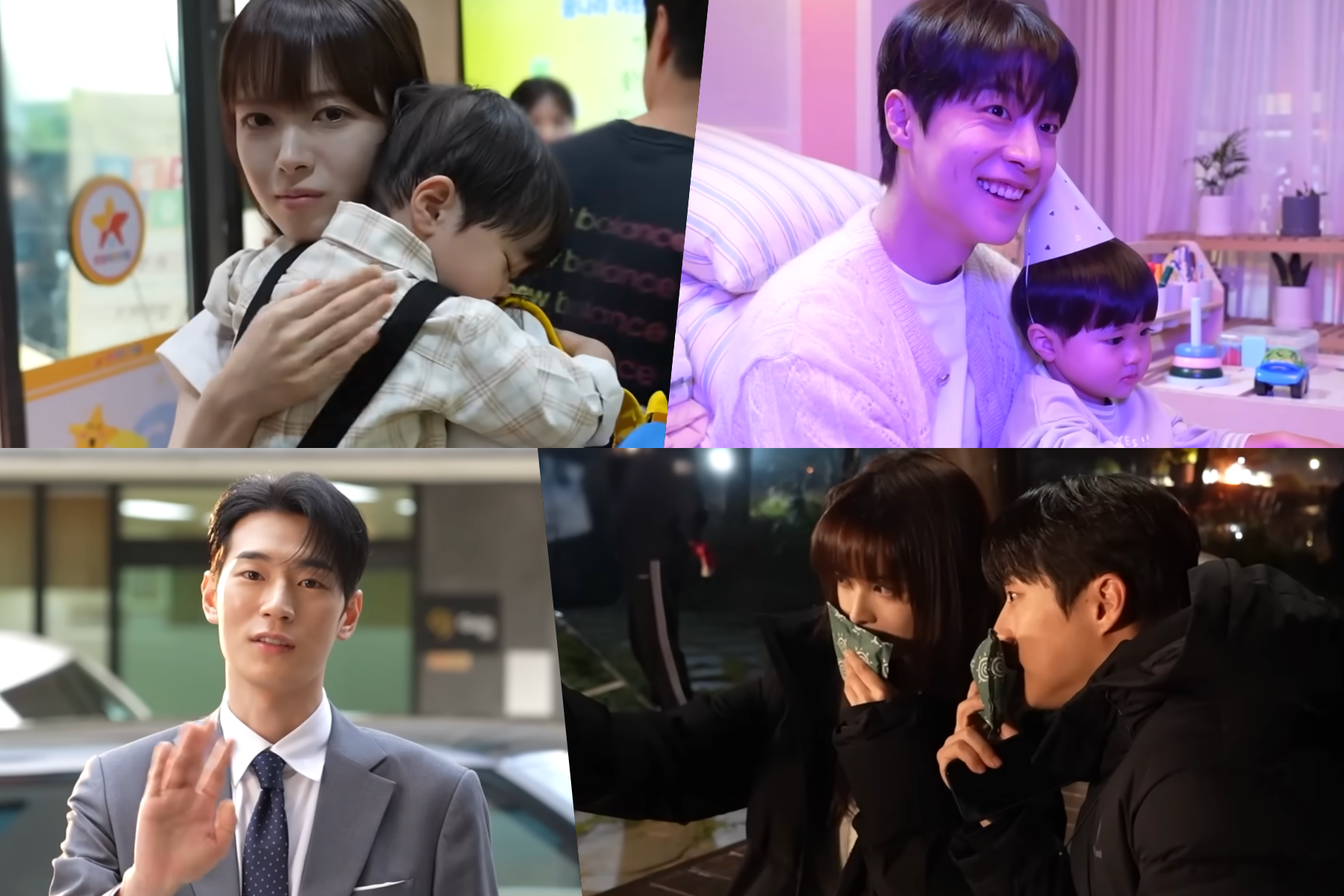
 Lee Je-hoon in a suit waving / News 1
Then the Timeline Fractured
Production on The Second Signal wrapped back in August of last year. But before it could air, Dispatch reported in December that Cho Jin-woong had a juvenile criminal record from his youth. The revelation triggered immediate backlash, and Cho ultimately announced his retirement from the entertainment industry in the aftermath a drastic move that left a finished drama with no clear path to broadcast. By February, Signal 2 had been quietly pulled from tvN’s first-quarter lineup. For months, it sat in limbo: fully shot, fully produced, and seemingly unreleasable with its lead actor now barred from new performances in the industry through retirement, while the footage already existed with him in it.
The AI Option That Wasn’t
What tvN revealed this week is how seriously it considered an unusually drastic fix: using artificial intelligence to digitally replace Cho Jin-woong in his scenes. According to the network’s statement, production teams tested video-editing techniques and AI-based face or performer substitution to see whether Cho’s presence could be minimized or removed entirely while preserving the drama’s integrity. Ultimately, they concluded the technology couldn’t convincingly replicate the natural flow of his performance and the show’s narrative continuity the uncanny-valley problem that still dogs AI video replacement even in 2026, especially for a dramatic lead whose face, voice, and physical performance are threaded through an entire season’s emotional arc.
That detail matters beyond this one show. Korean broadcasters have increasingly floated AI tools as a crisis-management option when a cast member becomes a liability post-production but tvN’s acknowledgment that the tech simply wasn’t good enough yet is a notable, if quiet, admission. It suggests that for all the industry buzz around generative AI’s disruptive potential in film and TV, there remain limits that even well-resourced networks can’t engineer around, at least not without compromising the final product.
 Kim Hye-soo dressed in a black coat / News 1
A Careful, Deliberate Statement
Rather than simply dropping the news, tvN leaned into transparency, explicitly stating that releasing the drama is not an endorsement of Cho’s past conduct. “The wrongful past actions of a specific cast member are an issue that cannot be taken lightly as a channel,” the network said, before adding that it also had to weigh “the time and effort of the many staff and production crew” who built the series. It’s a careful needle to thread: acknowledging the legitimacy of public concern while defending a decision that effectively moves forward with the work as shot, rather than scrapping it or attempting a costlier reshoot.
This tension between accountability for an individual’s past and protecting the collective labor of a production isn’t unique to Korean television, but it’s increasingly common in an industry where background revelations about cast members can surface well after filming wraps, when reshoots are financially or logistically impossible. How networks navigate it is becoming its own genre of public-relations case study.
What to Expect December 7
The Second Signal premieres December 7 at 10 p.m. KST, with the first episode’s runtime slightly trimmed so that episodes one and two can air back-to-back a scheduling choice likely designed to get viewers immersed quickly and blunt any hesitation at the front door. Whether audiences show up with the same enthusiasm that greeted the original in 2016 remains an open question. The series has to clear a bar that most sequels don’t: not just living up to a beloved predecessor creatively, but doing so while carrying real-world baggage that has nothing to do with the story itself.
What’s clear is that tvN is betting the work can stand apart from the controversy surrounding it a bet made easier, and more complicated, by the fact that artificial intelligence wasn’t yet capable of erasing the problem outright.


 English (US) ·
 Indonesian (ID) ·