
 8 hours ago
Paramount+
"Star Trek: Strange New Worlds" is a delightful show that captures the heart of "The Original Series" while updating its visuals and humor for modern audiences. If you've never watched a "Star Trek" show, this is the perfect entry point to the franchise. It has the right balance of serialization and episodic storytelling, with each episode serving as its own unique and self-contained adventure while still pushing a larger narrative.
Season 4 was no different — it's a grab bag of sci-fi delights where every episode hits a different tone and adopts an entirely different genre style. One week you'd see the crew of the Enterprise being hunted by dinosaurs, and the next might just be a haunted house horror episode. As great as this season was, however, it wasn't without some controversy. Specifically, some fans complained about the number of gimmick episodes (via Reddit), claiming that the show spends too much time exploring new genres rather than establishing its own.
But to those complaints I say: At least the show was never boring! Season 4 was an excellent season of television full of fun, entertaining moments, but most importantly, the many gimmicks of season 4 serve one meta function that makes "Strange New Worlds" stand out in today's TV landscape.
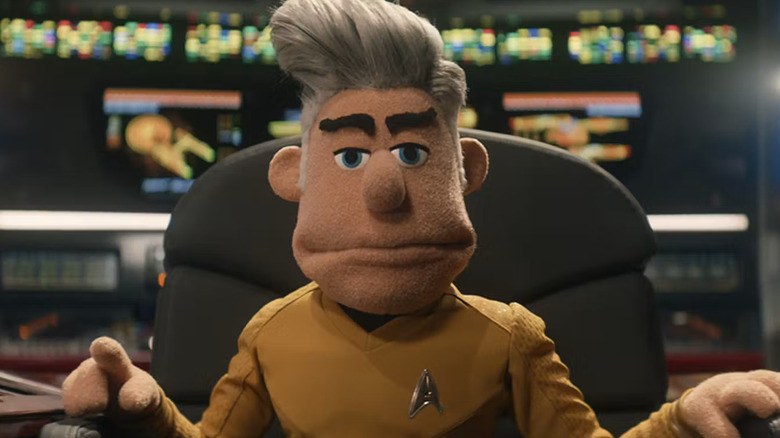
Watching an episode where the crew travels back in time, an episode that takes place in real time, or an episode in which the main cast is portrayed by puppets isn't just enjoyable, and "Strange New Worlds" is not just prime "Star Trek" that celebrates the entire history of the franchise. It's a celebration of a type of television that simply doesn't exist in the age of streaming, one from a time when shows had so many episodes they would experiment with gimmicks to freshen up their formulas.
Strange New Worlds' constant genre experimentation is more than a gimmick
Paramount+
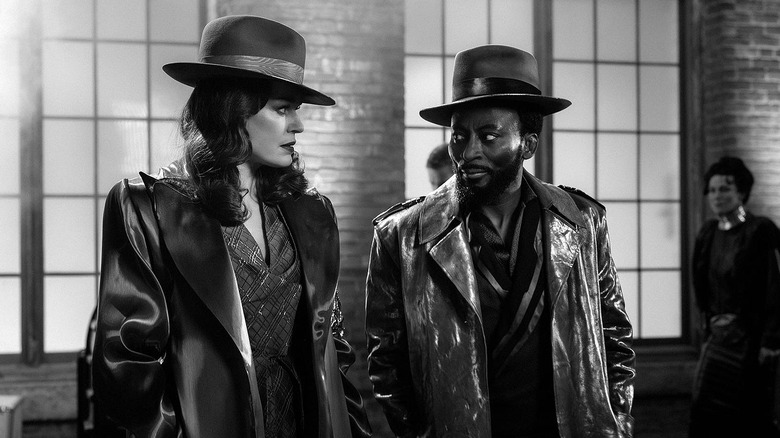
"Strange New Worlds" Season 4's ambitious approach provided an exciting new possibility for storytelling each week — a literal strange new world. The show frequently changed tone, aesthetic, and genre, while using that gimmick to say something new about the characters. Take the much-anticipated puppet episode, which deepened the character of Spock by giving him an anxiety attack of sorts. Or the episode that's essentially a stoner comedy but was also the episode that gives Scott and Ortegas the chance to become proper friends.
The real-time episode, the noir episode ... every week was a new style, many of them staples of television of old. We've seen many shows do a sudden musical episode ("Buffy the Vampire Slayer" remains the standard for a musical episode, as "Strange New Worlds" itself understands). "Supernatural" had an entire animated episode. "Magnum P.I." had a noir episode. "Fringe" made it a tradition to have every 19th episode in a season break away from the formula and do something unique (like a dystopian future episode or one featuring an LSD trip). Another example: Many sitcoms have a "Rashomon" episode, seeing the same thing from different perspectives. NBC's "Community" became a king of gimmicks, devoting entire episodes to doing genre parodies and homages to Westerns, mockumentaries, and claymation Christmas specials.
Unfortunately, that type of storytelling doesn't really exist anymore. With streaming, there are fewer episodes per season. Plus, a rise in serialization means every episode has to move the plot forward or be labeled as "filler."
That's not the case with this beautiful and chaotic sci-fi show. When every episode is "filler," there is no filler. Instead, we get a brand new and exciting adventure every week, which could only exist in a show that has the freedom to experiment. Long live "Strange New Worlds."



 English (US) ·
  Indonesian (ID) ·