
 4 months ago
Lionsgate
This article contains light spoilers for "The Furious."
Prachya Pinkaew's 2003 martial arts movie "Ong-Bak," starring Tony Jaa, hit like a cinematic concussion grenade when my friends and I stumbled across it in high school. For the rest of that decade, we followed Jaa wherever he went, watching him knee and elbow men in the skull and perform dazzling physical feats the likes of which we'd never seen. That film sent us down a rabbit hole that we settled into comfortably, decorating it like a second home. It led us to the movies of Jackie Chan, Michelle Yeoh, Donnie Yen, Jet Li, and many others, and ever since, I've been chasing that dragon (shout out to Bruce Lee), hoping for a new martial arts movie to come along that gives me a similar feeling to the one I felt during those early days of discovery. It happens every once in a while — Gareth Evans' genre-defining "The Raid" absolutely fit the bill — but it's rare that a new film can legitimately leave a mark in the genre.
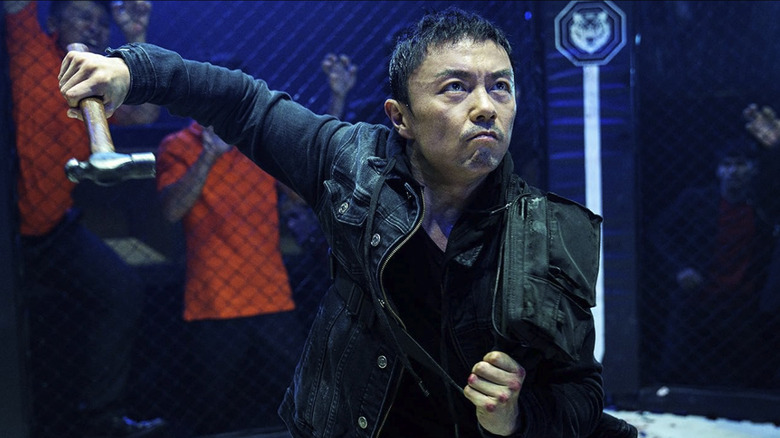
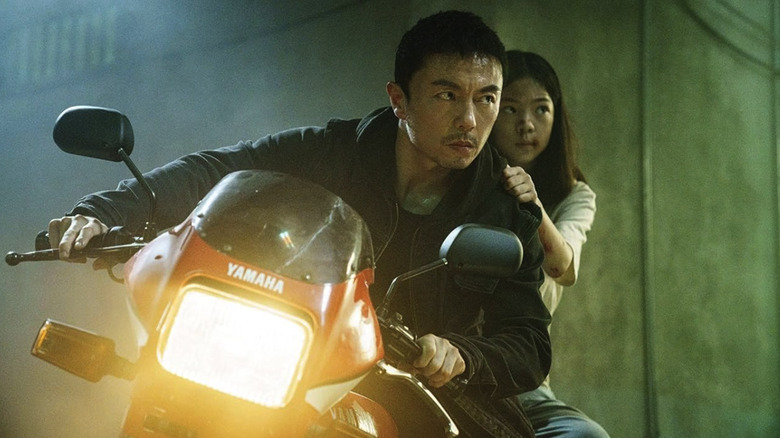
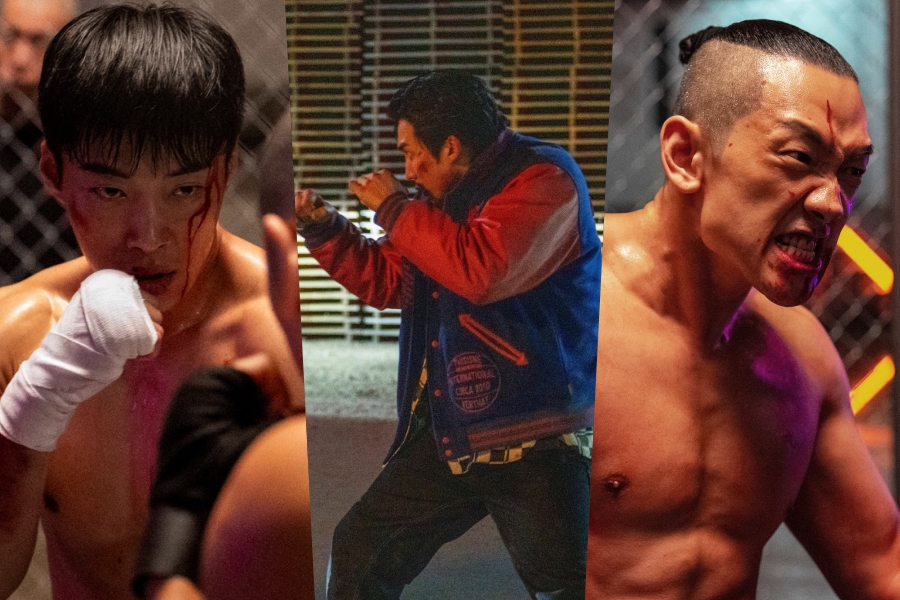
I'm thrilled to report that it's finally happened again. Kenji Tanigaki's "The Furious" is a bone-crunching, face-smashing, high-kicking martial arts spectacular that follows a man named Wang Wei (Xie Miao) on the hunt for his kidnapped daughter. Along the way, he teams up with a husband (Joe Taslim) searching for his missing journalist wife, and the two brawl their way through the underworld in ridiculously entertaining fashion.
I had the chance to speak with Tanigaki about crafting the movie's bonkers action sequences, weaving humor into the story, that jaw-dropping final fight, and more.
Note: This interview has been lightly edited for clarity and brevity.
The 'bar was higher' for The Furious, according to Kenji Tanigaki
Lionsgate
/Film: I was curious if you have a personal philosophy of how you approach every action scene. Do you have like a North Star idea when you go into developing every action beat in a movie?
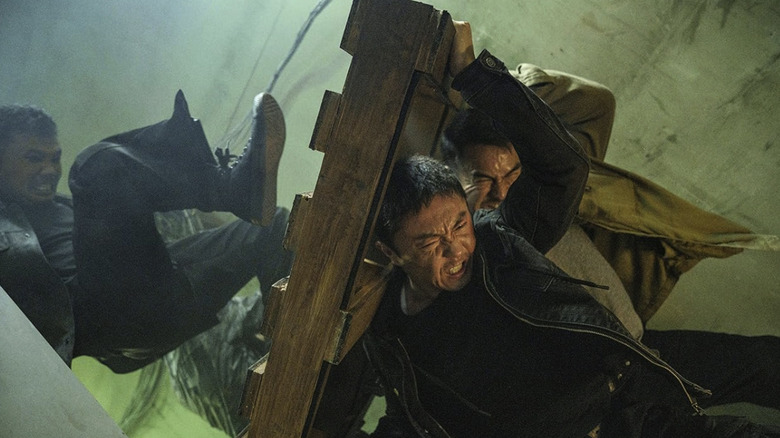
Kenji Tanagaki: My philosophy is no philosophy, because I work for the stories and I work for the character. So for this movie, the character is coming from their own cultural backgrounds, martial arts backgrounds. Because Xie Miao is Chinese wushu, Joe Taslim, judo, and Yayan Ruhian, pencak silat. I'm so lucky to have talented actors who can move. Even our rehearsal doesn't have to start from the [mimics punching slowly] one, two, three, four, five, six, seven. So they can get in the choreography right away.
So that's very lucky because many movies, on many movie productions, the actor remembers the choreography. "Oh, that's enough." No, no, no! Because remembering choreography nearly equals remembering the dialogue. Remembering dialogue doesn't mean anything, right? Because they spend the time to transform their own words. They digest by themselves. The same thing happens on the choreography. Remembering choreography doesn't mean anything. It's not the goal, but the starting point.
So our bar is higher than other movies, because they need to transform their own words, and they are very good at transforming their own words. So it's good. Yeah. So in this movie, we must know our strong point. We are not good at shooting a car chase or car explosion or "The Fast and Furious." No. Our strong point is back to the basic martial arts and more like the unplugged music, not jumping from the helicopter. No, no, no, no. Yeah, leave it to Mr. Tom Cruise. Our way is martial arts, and martial arts in Southeast Asia is based on their own culture. Why not? Yeah, we just use their cultural background and martial arts background.
The Furious director talks about how that ludicrous bicycle fight came to be
Lionsgate
This conversation is going to be published after the film opens, so we can talk about specifics. I would love to hear about the bicycle moment during the climactic fight at the end. Was that in the initial script? Tell me about how you went into making that.
Our process of making script, I said to the scriptwriter, "Oh, maybe Xie Miao — Wang Wei — and Paklung [Joey Iwanaga] break the window and jump from the fourth floor and fall down to the ground and they fight again." And the scriptwriter said, "No, no, no, they will die. They will die." I don't think they died, because they are so furious. So I don't think they died. But anyway, I said, "Oh, maybe we can put a bicycle as a cushion." And scriptwriter said, "Oh, that's good idea. Maybe we can use the bicycle. Yeah, yeah, use the bicycle as a weapon there." This is how we come to these set pieces.
Moments like that introduce a level of humor into the story. I'm reminded also of the scene where the people are trapped in the ice and get smashed apart into a million pieces during that fight scene. Can you talk about how you incorporated comedic moments into the movie and what function they serve for you as a storyteller?
Actually, believe it or not, I'm not a big fan of the violence. And violence has a lot of different kinds, but I'm not big fan of the gore, just a bloody or just a splatter. I need the ... even the violence [to be somewhat] over-the-top, make the audience laughing. So yeah, because just the violence I don't want. So sometimes the ice, or even the [severed] arm, but the arm is still [grabbing] his leg. So I think this is my taste. I need humor, even with how violent is.
Characterization fuels action for Kenji Tanigaki
Lionsgate
The fight scenes in this movie are so thrilling all the way through, I think because there's so much variation in the choreography. When you're watching an action movie that you did not work on, is lack of variation the biggest problem you see?
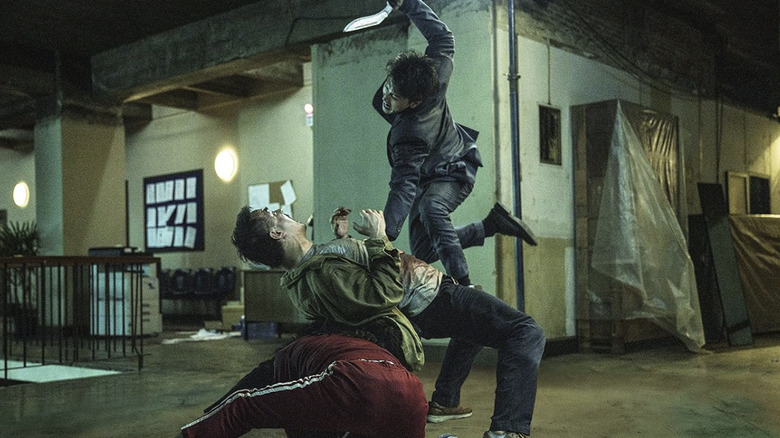
I'm a movie fan, and I'm the fanboy of the action movie. So when I watch other action movies, I try to enjoy, not be the [critic] or something. I just try to enjoy. So I don't know how the other movie is, but in my movie, I hope every character has a different aspect, and every action scene tries not to be the same. And the characterization sometimes is very important, as much as a story. So we are so lucky to use their own cultural background, the martial arts background, because our [casting], that process is very important. So I call Joe Taslim and Brian Le, "Hey, Joe Taslim, Brian Le." [Their] character is totally different than Yayan and Joey Iwanaga. So characterization is very important, and if you have the rich characterization, you can let the action sequences be very unique and different.
Totally. I know that you've previously worked as a member of stunt teams and as an action director. So I was wondering if you could talk a little bit about the process of working with the people who served those roles on "The Furious."
Our action choreographer is Kensuke Sonomura. We are coming from the same school, but different taste, different side. So it's good, because as you said, we need a lot of different styles in one movie, so it's very good collaboration with him and we share the stunt team, we use the same stunt team. So they know what the difference is between me and him and the mutual language between us. So it's a very good collaboration.
I just said we share the same stunt team, but this time, because we shot in Bangkok, we collaborated with a Thai team and the Thai team is amazing, surprisingly amazing. They are so strong and they're so collaborative and the whole Thai crew is very, very good. They're amazing. Yeah, I must give some credit to them.
The climactic fight was the most challenging scene for The Furious director
Lionsgate
So if I were to ask what the most challenging scene in "The Furious" was, I'm sure the actors would have one answer, and the stunt coordinator might have a different answer. But for you as the director, what was the most challenging scene to achieve in this?
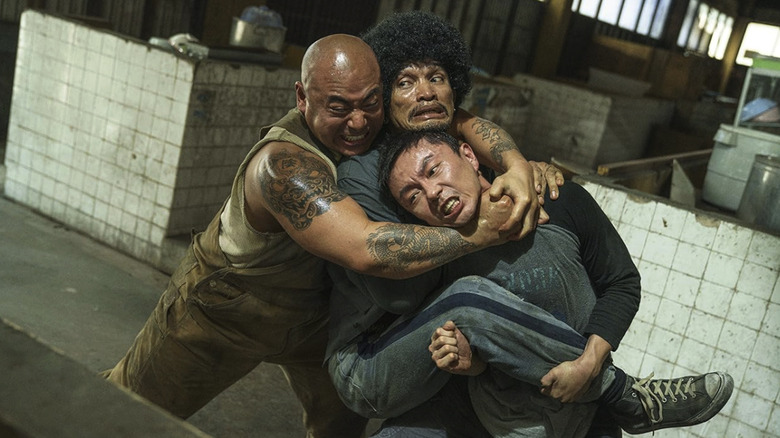
I must say the ending fight for sure, because [it was] very complicated and that scene was shot in the almost ending part of the production. So everybody was exhausted, everybody was tired, and we spent 18 nights on that set. And I realized, "Oh, human beings must sleep in the night." So it's so exhausting and very complicated, but they did a great job, and five guys fight from the three different parties.
It's very complicated because [gets into character and points around the room at imaginary combatants] I beat you, but I beat you too, but sometimes me and you beat him. So that's very complicated, but very fun. At least I have never watched this kind of situation in a fight. So to me, it's very challenging, but at the same time, it's very innovative.
"The Furious" is in theaters now.

 English (US) ·
  Indonesian (ID) ·