
 4 months ago
Lucasfilm
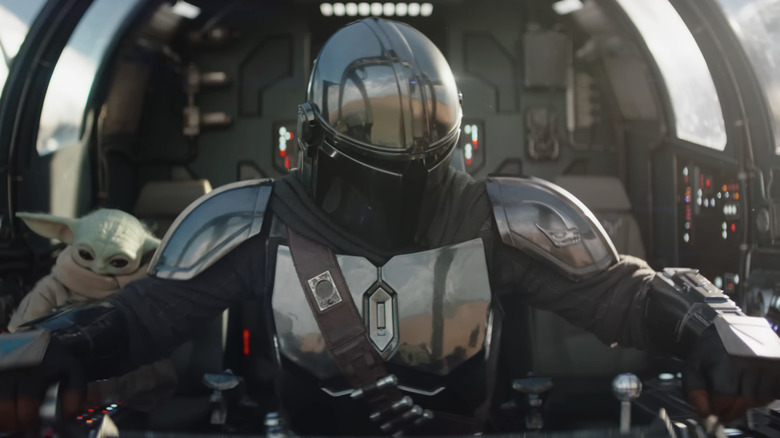
"The Mandalorian and Grogu" is here, bringing the first "Star Wars" movie to theaters in seven years. Unfortunately, the response is quite mixed. /Film's own reviewer called the film the most mundane and dull "Star Wars" movie. This is in no small part due to how much the film feels like a couple of episodes of TV stitched together.
Indeed, this is the biggest problem with "The Mandalorian and Grogu," and its TV-ness impacts every aspect of the film, including how it breaks a cardinal rule of "Star Wars" at the very start.
You see, "The Mandalorian and Grogu" has opening credits.
This feels incredibly odd in a "Star Wars" movie. The lack of opening credits was one of the small but essential decisions George Lucas made for the first film back in 1977 that made the original trilogy so unique and groundbreaking.
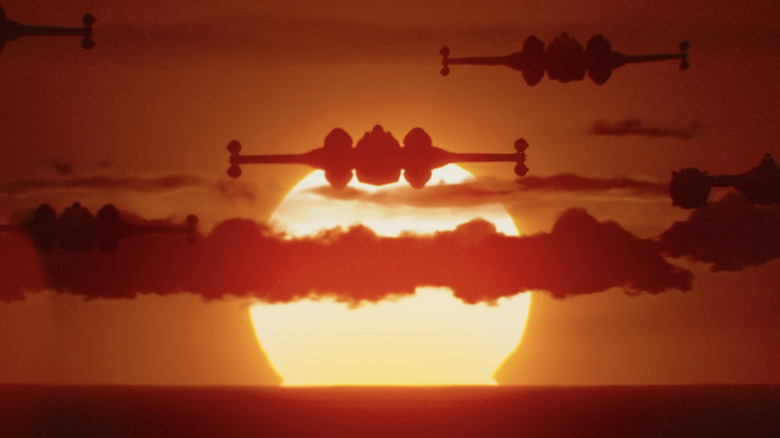
The film even starts with a teaser act straight out of a TV show that ends with a title drop. Sure, it's a cool sequence involving Din Djarin (Pedro Pascal) and Grogu killing a whole bunch of former imperials and destroying AT-ATs on a mountain range, like Hannibal crossing the Alps with elephants. Still, having 15 or so minutes of runtime before the film's title drops, only to then get an opening credits sequence with the name of the main cast playing during a montage of ships arriving at a rebel base, is strange.
It might be an homage to spaghetti westerns, maybe even a tribute to M*A*S*H. Or it might be a way to signify that this is very much a TV show turned into a movie. Regardless, it feels like "The Mandalorian and Grogu" breaking away from nearly 50 years of "Star Wars" tradition — and not in a good way.
George Lucas quit a guild over opening credits
Lucasfilm
When George Lucas made the original "Star Wars" in 1977, he changed the way Hollywood worked forever. He helped bring about a change in the kind of movies that were made, in the kind of technology that was being used, and how central merchandise would become to film. But not every change was that noticeable, or immediately apparent. A lack of opening credits in "The Empire Strikes Back" caused the ire of the Directors Guild of America, and led to Lucas having to resign from the guild. (It was actually specifically about the lack of a director's credit, but the point still stands).
According to a 1981 profile of Lucas from The New York Times, an anonymous colleague said, "The vision inside his head is crystal clear. That he can not be turned from it or corrupted by outside influences is the key to his success." Simply put, Lucas would rather go scorched earth on the old institutions rather than change his vision for the films. It came at a cost, of course. Lucas might not have cared about leaving the guild, but his resignation led to Lucas having to specifically look for non-guild directors for "Return of the Jedi."
Following the huge success of "Star Wars," more and more movies started to skip the opening credits entirely. In time, new and bold filmmakers carried on the tradition and further experimented with credits.
This wasn't just a whim. The lack of credits added to the film's immersion, even if only a tiny bit. It made the audience feel like they were watching a retelling of stories that could have happened a long time ago, somewhere far, far away. Traditional credits listing the cast would have broken that illusion and reminded you that you were watching a movie with actors and a crew.
Experimentation can be good, when done right
Lucasfilm
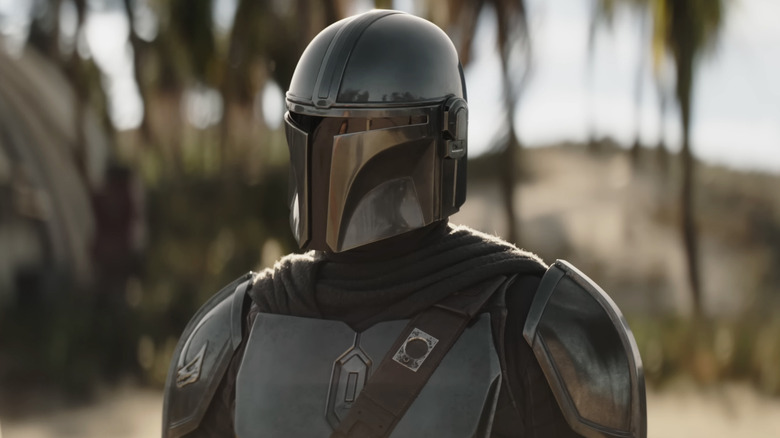
This isn't to say that "Star Wars" should remain the same as when George Lucas made the first film back in 1977. Quite the opposite, experimentation is good. Despite many problems, the Disney era has expanded the idea of what "Star Wars" can be, with shows like "Andor" and "Skeleton Crew" being vastly different yet co-existing in the same franchise. Even "The Mandalorian" at first proved to be quite a departure from what had come before that it felt like a bold experiment.
"Star Wars" feels bigger and better because of the many TV shows, because of the animated titles, because of the prequels. This is now a franchise that can sustain any number of stories and tones. To try and declare that "Star Wars" should be any one uniform thing misunderstands why this sandbox has remained so popular and inspiring over the decades.
And yet, the problem with "The Mandalorian and Grogu" breaking this particular tradition is that it also impacts the movie. When "Rogue One" skipped the opening crawl, it was seen as a big departure from the other films, but it didn't impact the viewing experience of that movie. Here, the addition of opening credits takes away from the immersion of the story, lessens the way the audience gets engrossed in the cinematic experience. Instead, it's a big reminder that this is a TV show on the big screen, not really a proper "Star Wars" movie.


 English (US) ·
  Indonesian (ID) ·