
 2 months ago
CBS
In 2026, the "Mission: Impossible" franchise is best known as a series of films in which star Tom Cruise performs increasingly grander and crazier stunts for the world's amusement. However, this was not always the case, for while Cruise's star power has consumed the "Mission: Impossible" brand, for the 30 years prior to Brian De Palma's original 1996 film, the name was known for the TV series created by Bruce Geller, which aired from 1966 to 1973. Although the ensemble of actors who appeared in the show varied during its seven-year run, the cast who were there to establish "Mission: Impossible" at the beginning of its 60-year existence helped make the franchise as popular and entertaining as it is today.
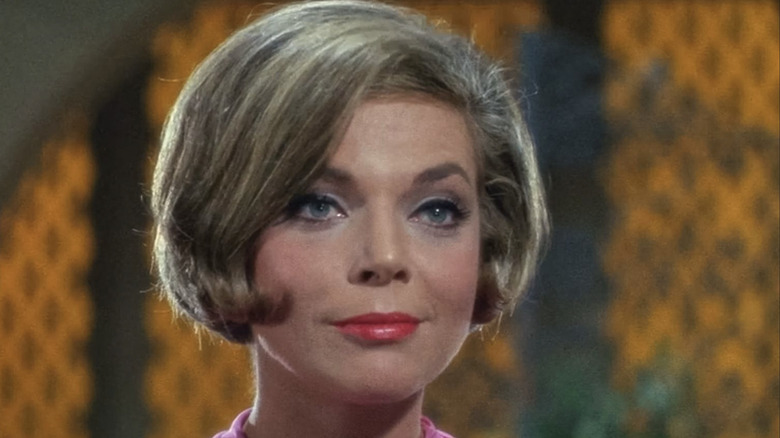
One of those key original cast members was Barbara Bain, who played Impossible Mission Force agent Cinnamon Carter during the show's first three seasons. During those seasons, Bain was the only female regular on the series, which meant that, barring the occasional guest star, she was frequently the only woman in any given episode. Fortunately, this helped her excellent work stand out that much more to Emmy voters, so much so that Bain won the Emmy for Outstanding Continued Performance By An Actress in a Leading Dramatic Series three years in a row, from 1967-1969. This means that Bain's entire "Mission: Impossible" tenure is Emmy-winning! It's a feat which wouldn't be matched until Tyne Daly won three years in a row for "Cagney & Lacey" in the 1980s, with a fourth win coming after a gap of two years. Bain's record-setting work on "Mission: Impossible" is a testament not just to her own talent, but to how varied and challenging the original TV series was.
Barbara Bain was on Mission: Impossible for three years, but played a variety of roles within a role
CBS
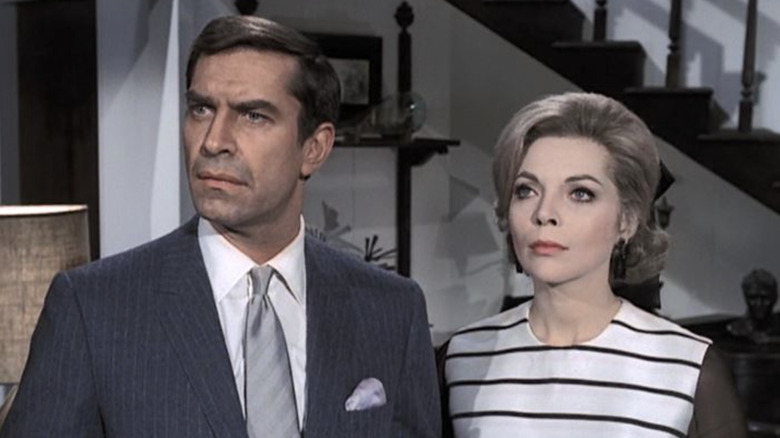
The original "Mission: Impossible" TV series involves the same general concept as the feature films, which is that there exists a super-secret international (though primarily American) spy force called the IMF, which is brought in via unofficial channels to take on various missions that a governmental agency can't or won't accomplish. The IMF appears to be primarily comprised of a single team of agents recruited by a team leader, and this man ends up choosing most of the same agents every episode. Despite the likes of Barney Collier (Greg Morris), Willy Armitage (Peter Lupus), Cinnamon Carter, and Rollin Hand (Martin Landau, to whom Bain was married when the series was made) appearing every week, audiences never really got to learn too much about their actual characters.
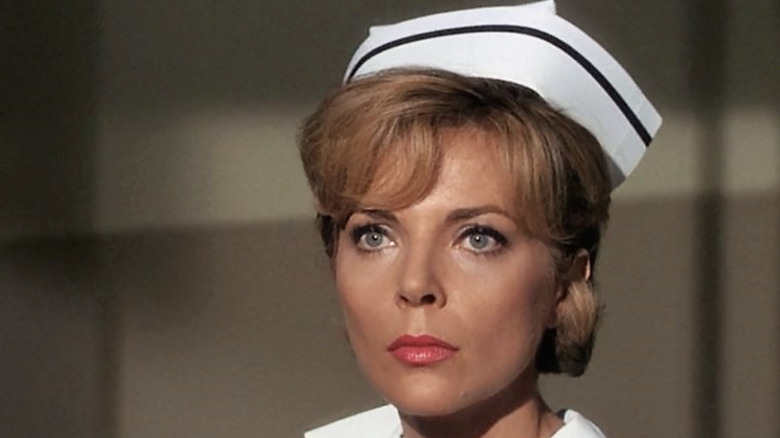
That's because the mission was always their primary concern, and a majority of the missions the writers sent the IMF on required the agents to assume different identities. In the case of characters like Rollin, that meant impersonating other people via masks (meaning a guest actor would take over the role for a bit). In Cinnamon's case, however, Bain was often asked to put on an accent, change her appearance, or do something else to that effect in order to go undercover. This is likely what helped her performance stand out to Emmy voters, as it proved that Bain had a considerable and credible range. It meant that Bain could play multiple roles within the same role with a minimum of makeup or cinematic trickery. It also allowed Bain, through Cinnamon's missions, to play everything from a sultry femme fatale to an independent career woman to a damsel in distress and more.
Barbara Bain was such a staple of Mission: Impossible that it took a year to replace her
CBS
Because "Mission: Impossible" was always more focused on each episode's plot and the procedural elements within, there aren't many episodes that stand out when it comes to character. The one episode that best showcases Barbara Bain's performance in the series is season 3's "The Exchange," in which Cinnamon is captured by Soviet-esque agents (the show was always careful not to use names of actual countries or people) who try to break her by exacerbating her isolation and claustrophobia while incarcerated.
Bain is apparently claustrophobic in real life, which accounts for how surprisingly affecting her performance in the episode is. Other than a handful of standout moments like that, Bain's Cinnamon is a reliable spy hero in the series, so much so that she reprised her role in a 1997 episode of "Diagnosis: Murder" that paid homage to classic spy TV shows.
Bain was so influential to "Mission: Impossible" that when both she and Landau left the show after its third season, Landau's role was smoothly recast with a new character (played by Leonard Nimoy), but Bain's wasn't recast at all. Instead, the entire fourth season featured a cadre of female guest stars who took over Cinnamon's role(s), with only Lee Meriwether's Tracey appearing in multiple episodes. Obviously, Bain wasn't irreplaceable as far as a female character on the series is concerned (Lesley Ann Warren and Lynda Day George took over Bain's spot during the last two seasons), but it's likely that the showrunners and producers knew it'd be initially hard to find someone else who wasn't intimidated after Bain's record-setting Emmy run. To any other actress at the time, and even now, such a feat seems almost, well, impossible.






 English (US) ·
  Indonesian (ID) ·