
 3 months ago
ABC
In 1975, Norman Lear was riding high, having created a string of successful sitcoms including "All in the Family," "Sanford and Son," "Maude," "Good Times," and "The Jeffersons." The latter debuted in 75 and ran for 11 seasons. Lear's other show of 1975, "Hot l Baltimore," however, lasted one season, even with the benefit of an opening title card warning of the raunch therein.
The title "Hot l Baltimore" doesn't make much sense without the visual it's taken from: a neon sign for the Hotel Baltimore with a burned-out "e." This sitcom was adapted from the 1973 Off-Broadway play "The Hot l Baltimore" by Lanford Wilson (which was still playing when the show debuted). Lear's TV version was surprisingly progressive and mature for a sitcom at the time, even if it was never going to be one of the best shows of the 1970s. Sure, his "All in the Family" had pushed boundaries with its focus on the social issues of the day and its loudmouthed yet lovable patriarch, Archie Bunker. But "Hot l Baltimore" broke ground in new ways, becoming the first ABC show to carry a viewer warning.
According to the New York Times, a title card shown before the opening credits advised viewers to exercise caution. "The following program deals with mature subject matter," it read. "Parental judgment and discretion are advised." These were the days before "The Simpsons" transformed the TV landscape with its irreverent satire and depiction of a dysfunctional American family. As such, ABC evidently felt viewers needed priming for the content of "Hot l Baltimore" — though the potential allure of a warning to audiences surely wasn't lost on the network executives. But what exactly happened on this show to require such a thing?
Hot l Baltimore wasn't your typical sitcom
ABC
Norman Lear died in 2023 at the age of 101, having transformed television with his progressive sitcoms. Unfortunately, "Hot l Baltimore" isn't remembered as having contributed to that legacy. Had it lasted longer than it did, however, things might have been different.
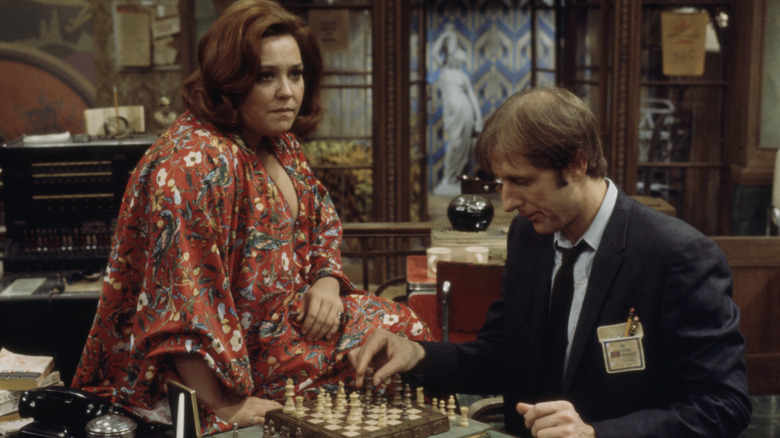
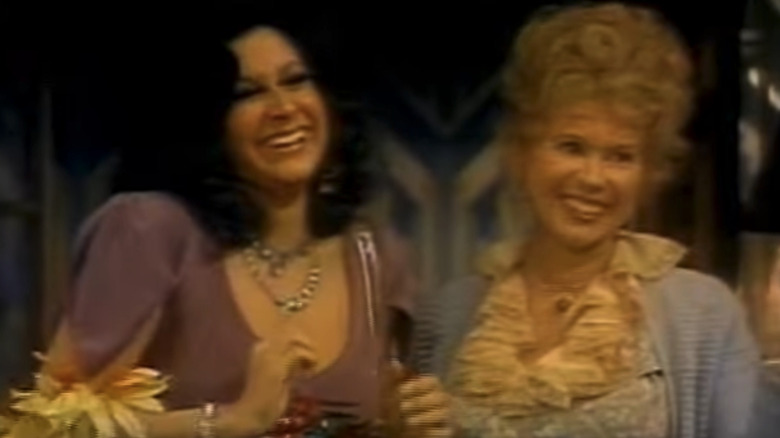
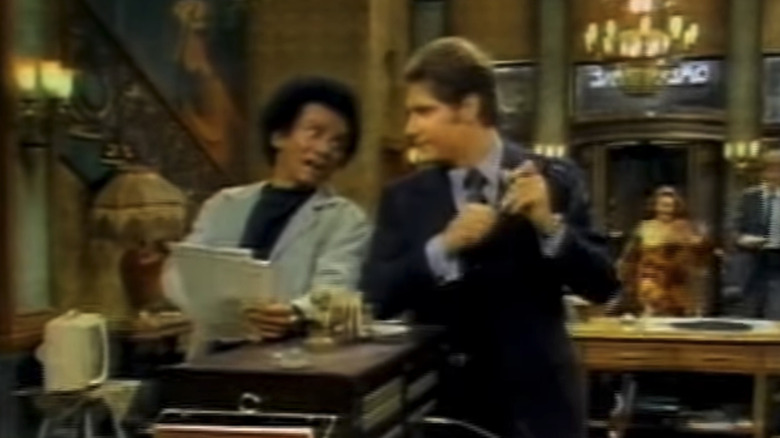
The show is set in the fictional Hotel Baltimore, where sex workers April Green (Conchata Ferrell) and Suzy Marta Rocket (Jeannie Linero) conduct their business. The hotel is run by manager Clifford Ainsley (Richard Masur), while desk clerk Bill Lewis (James Cromwell) oversees the comings and goings in the hotel lobby. Already, then, you can see how this particular show wasn't your standard sitcom. The main cast also included Lee Bergere and Henry Calvert as George and Gordon, an openly gay couple, alongside Al Freeman Jr.'s Charles Bingham, Gloria LeRoy's waitress Millie, Robin Wilson's tomboy Jackie, and Stan Gottlieb's elderly Mr. Morse, who never seemed like he would last an entire episode.
Lear's "All in the Family" was met with a lot of doubt and warning at the start, and he was surely ready for more of it with "Hot l Baltimore." The show premiered on January 24, 1975, with a story about Suzy, who decides to "get out of the business" to shack up with a Hollywood producer. April knows Suzy's new beau to be a hustler and does all she can to convince her friend to leave him. Across 12 more episodes, "Hot l Baltimore" told stories that often involved the hotel tenants trying to save their seedy establishment and/or protesting against rising rents. Not exactly shocking by today's standards, then. At the time, however, the show was racy enough to warrant a warning and even managed to get itself banned by a local affiliate.
Hot l Baltimore was too short-lived to cause major controversy
ABC
As tame as "Hot l Baltimore" is when viewed today, the sexual innuendo was significant for a show of this sort at the time, and the dialogue was often risqué. The stories also weren't standard Norman Lear sitcom fare. Episode 2, for example, involved one of Suzy's clients dying in her room before he's propped in front of a TV in the hotel lobby.
Whether it was the content, the unorthodox setting, or the characters, ABC clearly saw fit to give viewers fair warning ahead of the debut episode, and according to the New York Times, was considering further warnings on a "case‐by‐case basis." Sadly, "Hot l Baltimore" didn't really catch on enough to cause any kind of major controversy. According to a 1978 study, ABC's Baltimore affiliate WJZ-TV did ban the premiere episode after becoming "concerned with the image of our city as shown in the program." Otherwise, the show was too short-lived to cause much of a stir.
The New York Times' John J. O'Connor certainly saw promise in "Hot l Baltimore," describing it as "the most interesting project of the winter television season." Unfortunately, it ultimately failed to live up to the high standard set by Lear's other projects of the time. According to TV Ratings Guide, "Hot l Baltimore" finished 68th for the season with an average rating of 14.7. It seems ABC's warning either didn't work well enough, or worked a little too well. The network canceled the show after 13 episodes, with the final installment airing June 6, 1975. Even then, however, it seems its creator didn't feel too bad. Lear only ever had one regret in his career, and it wasn't "Hot l Baltimore."





 English (US) ·
  Indonesian (ID) ·