
 1 month ago
Metro-Goldwyn-Mayer
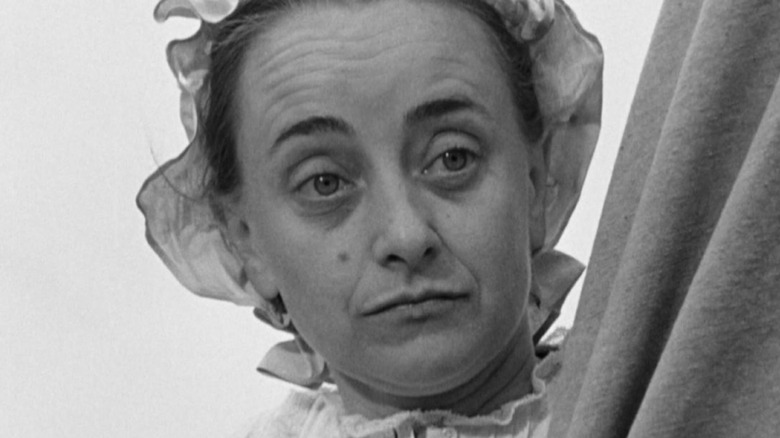
William A. Wellman is known by most as the director of the very first film to win the Academy Award for Best Picture (then called "Outstanding Picture") with his 1927 war movie "Wings," starring Clara Bow, Charles "Buddy" Rogers, and Richard Arlen. He directed over 80 films throughout his career, and while he's arguably most well-known for his masculine-centered movies like "The Public Enemy" and "The Story of G.I. Joe," he also directed incredible vehicles for women like "Night Nurse" with Barbara Stanwyck in her breakthrough role and the original 1937 version of "A Star Is Born." Really, for as much as Wellman is adored by male fans of classic cinema, his contributions to showcasing women as fully-realized human beings (a shockingly novel concept even today!) are often overlooked.
One of the best examples of this is a mostly forgotten Western film from 1951 called "Westward the Women," a story about the migration of 140 mail-order brides from Chicago to a new California mining town in the 1850s. The screenplay was written by Charles Schnee, known for "Red River," "The Furies," "They Live by Night," and the Oscar-winning "The Bad and the Beautiful." But perhaps most interesting is that the film's Story By credit belongs to the legendary Frank Capra, the man behind "It Happened One Night," "Mr. Smith Goes to Washington," and the seminal classic (and Jimmy Stewart favorite) "It's a Wonderful Life," among many others.
"Westward the Women" follows many of the traditional Western conventions, but by refocusing the story away from a cowboy hero and instead prioritizing the perspectives of the women on this arduous journey, the film continually subverts audience expectations. It's just as brutal as any Western you can imagine, but the movie is firmly on the side of the women.
Westward the Women was ahead of its time
Metro-Goldwyn-Mayer
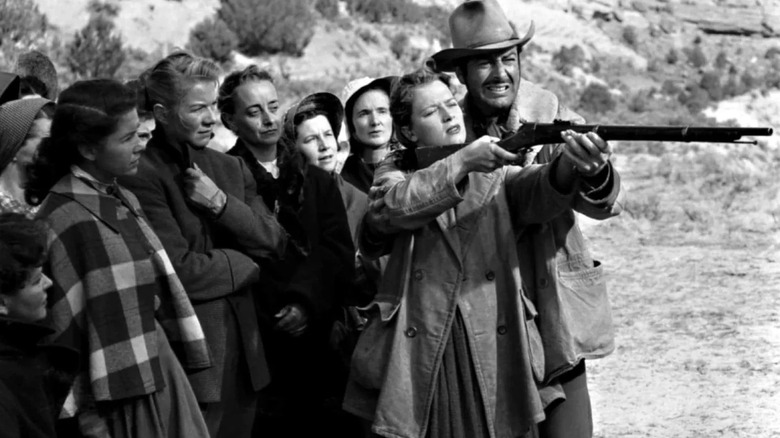
Metro-Goldwyn-Mayer wisely chose to feature Robert Taylor's Buck Wyatt at the center of the promotional materials for the film, helping to hide the fact that he plays a wagon master who is totally misogynistic and that "Westward the Women" is more of an ensemble piece. The women on this migration journey come from a variety of backgrounds, ranging from farmers and immigrants to glamorous former showgirls. But as anyone who has ever played "Oregon Trail" can tell you, the journey out West is never easy. Wagon hands are killed for being rapists, forcing the women to learn how to do their jobs themselves. Women use gunfire to protect themselves and others. There are trail driving accidents. Children die. There are moments of the film that are incredibly bleak, and it's all presented as matter-of-fact. This is not a "girl power" Western; it's a true-to-form Western that just happens to be about women.
But perhaps what's most interesting is that Buck waxes poetically about maintaining the women's "virtue," prioritizing femininity and virginity at all costs. Yet, when it comes to surviving the harshness of the Western frontier, the "masculinized" women fare better. Where "Westward the Women" truly succeeds is that William A. Wellman is very clearly aware of this contradiction and presents these traits as nothing more than a necessary behavior for survival. They are not "better" for adopting masculine traits on their journey, because they're traits required of anyone on the migration trail regardless of gender identity. As the film declares, "There's two things in this world that scare me, and a good woman is both." If you're a fan of Westerns, this is a must-watch.
"Westward the Women" is available on video-on-demand platforms.


 English (US) ·
  Indonesian (ID) ·