
 8 hours ago
Dennys Ilic/Marvel Studios
This article contains spoilers for "VisionQuest" Episode 4, "Malware."
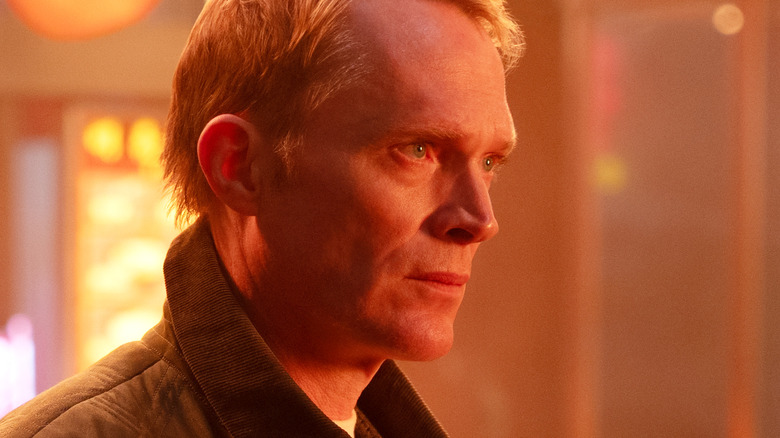
Marvel Studios' series "VisionQuest" has united several artificial intelligence (AI) characters from across the Marvel Cinematic Universe inside Vision's (Paul Bettany) head, like the AI Avengers. But the show has been hinting at another, more ancient AI: the Human Torch. No, not Johnny Storm of the Fantastic Four.
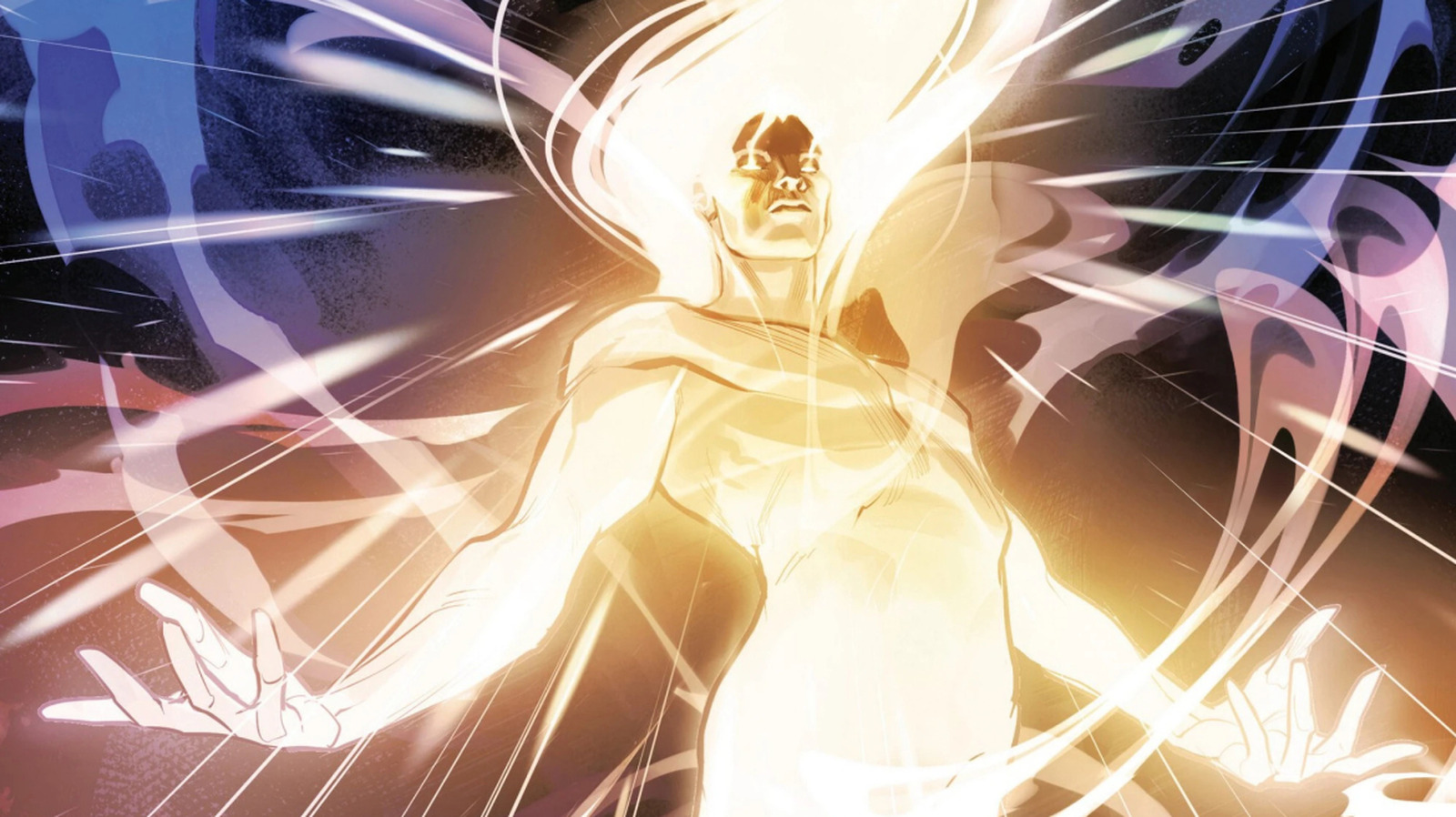
In Vision's mind palace where the AIs dwell, there's a painting of a man of fire, referred to as the "Synthetic Man" and the first AI. Marvel fans will recognize him as Jim Hammond, the Human Torch. Per Marvel Comics, Hammond was created during World War II by Dr. Phineas Horton (who's name-dropped and compared to Gepetto, Pinocchio's creator, in "VisionQuest"). He was an android with the ability to light himself on fire and control those flames, hence "the Human Torch."
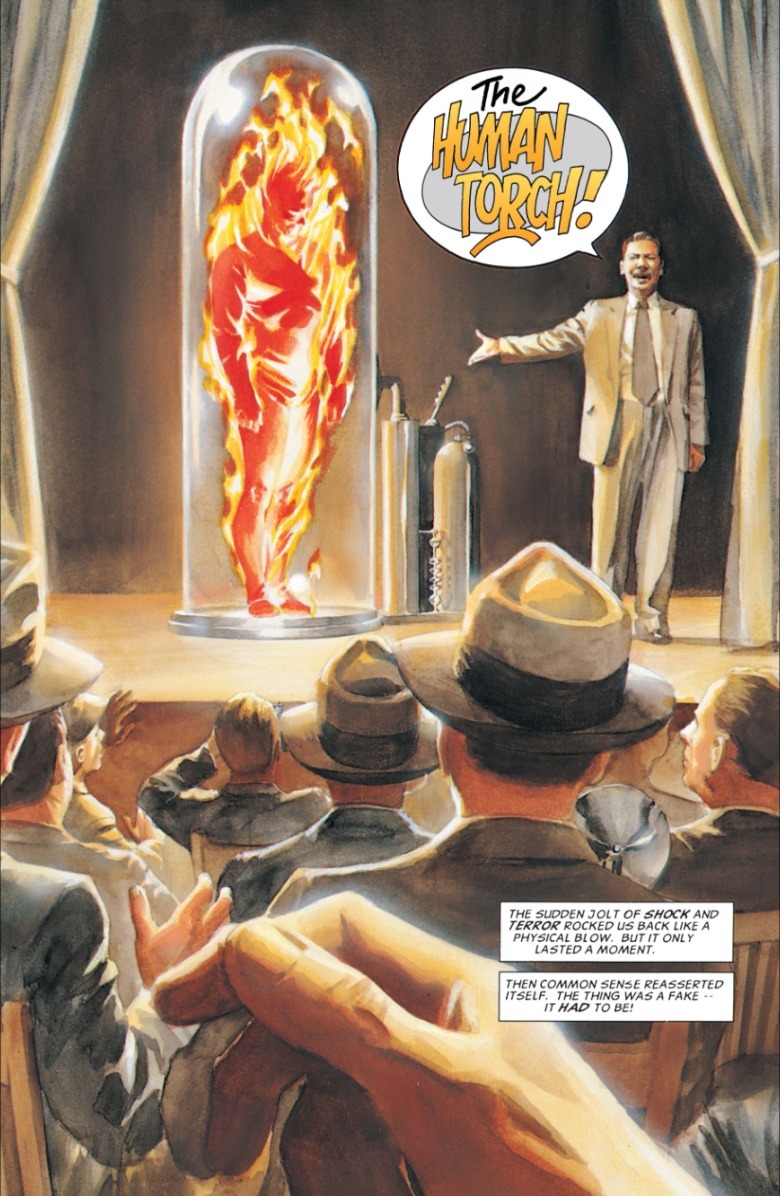
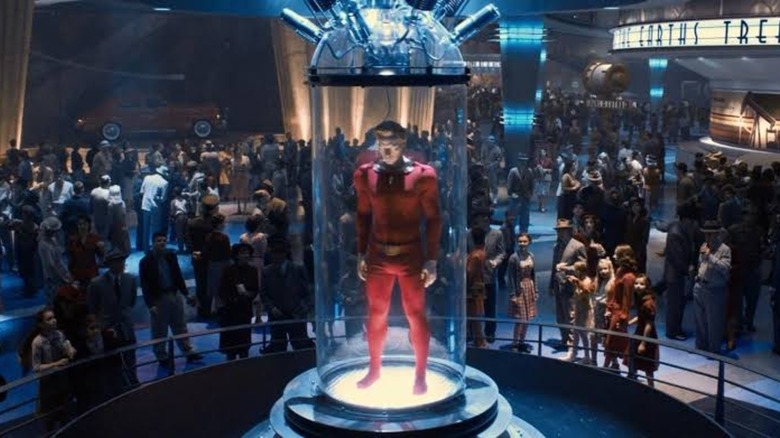
But unlike many other cases in the MCU, this isn't a retcon that comes out of nowhere. Back in "Captain America: The First Avenger," when Steve Rogers (Chris Evans) visited the Stark Expo, an artificial humanoid sat on display in a glass case. Observant Marvel fans recognized that as the Human Torch. (It's modeled on an image from Kurt Busiek and Alex Ross' "Marvels.")
 Marvel Comics
Created by writer-artist Carl Burgos, the Jim Hammond Human Torch debuted alongside Namor the Sub-Mariner (himself a Clint Eastwood favorite, funnily enough) in 1939, preceding the 1940 debut of Captain America by over a year. He's one of the first ever Marvel Comics heroes, older than the name "Marvel Comics" itself. (In 1939, it was known as "Timely Comics.") He also has a connection to Vision that justifies his inclusion in "VisionQuest."
The original Human Torch's connection to Vision, explained
Marvel Studios
"Avengers" writer Roy Thomas (the co-creator of Ultron and Vision) is a big fan of the "Golden Age of Comics," i.e. the first superheroes created in the 1930s-40s. He created superhero team "The Invaders," which retroactively revealed the World War II-era Marvel heroes like Human Torch, Namor, and Captain America had regularly teamed-up against the Axis Powers.
Thomas further revealed the mutant twin Avengers Quicksilver and Scarlet Witch were the children of two Invaders, the Whizzer and Miss America. (The later, superior twist that the twins are the children of Magneto was itself undone in 2015 when the Maximoffs made it to the MCU but 20th Century Fox held the "X-Men" film rights — don't get me started on that.)
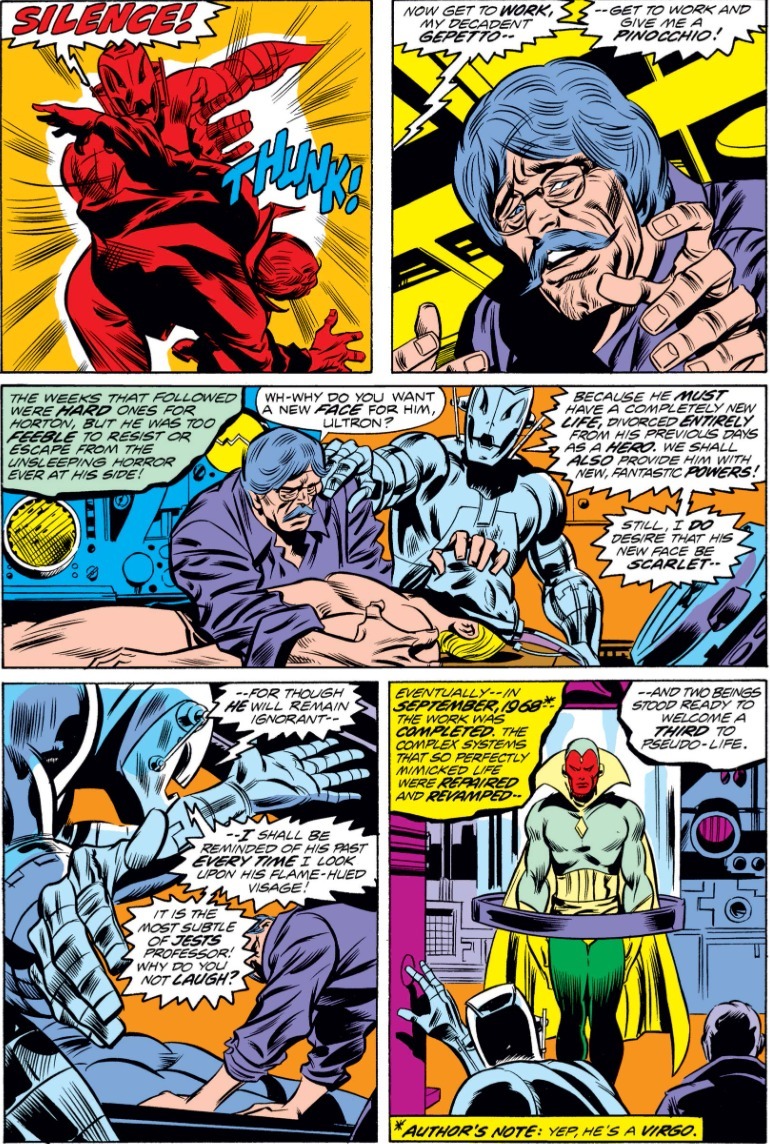
One of Thomas' Golden Age/Avengers connections only got confirmed after he left: Steve Englehart and Sal Buscema's "Avengers" #135 showed Ultron had forced Dr. Horton to rebuild Jim Hammond's shell into the Vision.
 Marvel Comics
Vision is the Human Torch, and that connection eventually got used to bring the Human Torch back.
Now, we know from "Avengers: Age of Ultron" that this isn't the case for Paul Bettany's Vision, as his synthezoid body was fashioned wholesale from Vibranium and Dr. Helen Cho's (Claudia Kim) Regeneration Cradle. The "Synthetic Man" label also makes it unclear if "VisionQuest" will call Hammond "the Human Torch" — the MCU Fantastic Four are from a parallel universe, but two Human Torches might still create branding confusion.
Regardless, "VisionQuest" has made the Human Torch's "First Avenger" cameo more than an Easter Egg. In fact, it would've actually been more continuity-violating if "VisionQuest" hadn't called back to the Human Torch, no matter how easily-overlooked his previous MCU appearance was.
"VisionQuest" is currently streaming on Disney+.





 English (US) ·
 Indonesian (ID) ·